






Approaching Ayurveda

The power of Āyurveda is immense and much of it remains untapped; and it is important for us to revisit this timeless science of healing and unravel its magnificence.

Approaching Āyurveda

Isn’t it a sense of pride and joy to know that one’s heritage holds a potential key to ease human suffering? Our traditional systems of knowledge and wisdom hold the key to unlock the secrets of health and wellness—physically, physiologically and mentally—and even handhold us through our spiritual journey. This ancestral and indigenous wisdom comes to us from a timeless source as an upaveda – Āyurveda, making it a consciousness-based paradigm aimed to maintain a balance between body, mind and spirit.

It is not surprising, given our colonized conditioning, that the first mention of Āyurveda may immediately draw us to thoughts of smelly oils, bitter potions and unpalatable herbal tablets. Some may even immediately think of the numerous spas and exotic wooden tables with intricate carvings in heritage homes – the experience made complete with copious amounts of herb infused oils and body treatments that are a far removed from the European Swedish massage strokes directed for venous return and instant muscle relaxation.

Āyurveda, however, is much more than massages and symptomatic relief. It is a way of life that expresses the wisdom contained in the vedas for all beings to experience good health which is further extended to the spirit and wellbeing of community.

Most people approach health in a very self-contained and restrictive way. The mainstream models of wellness have often been associated with symptomatic relief keeping our attention fixed to the manifested symptoms and effectively away from addressing underlying causes that need to be eliminated. We have been conditioned to downplay our individual sense of ‘knowing’, intuition or very simply, our body awareness. Āyurveda’s approach has always been to put individual awareness of our health and intuitive connection foremost – giving credence to that ‘I don’t know how to explain it, but I don’t feel well’ expression especially when there is no manifested symptom or bloodwork to justify the reported dis-ease.

This intangibility of symptomatic observation has historically and painfully placed Āyurveda in the confines of labels like ‘irrational quackery’ for many generations, creating mistrust and cruelly providing room for ridicule even amongst the inheritors of this wisdom. Yet, the timelessness of this truth, this jñāna, remains intact. Cryptic, philosophical and ethereal, isn’t it?

The philosophy of Āyurveda sets the basic stratum of understanding all of creation. All matter, which not only includes humans and other sentient beings but also the inanimate rocks, crystals and liquids, arises from that same primordial essence which makes our very existence a matrix of sorts. The pañchamahābhūta (five great elements) and the Tridoṣa (three theory are not just imaginative facets. They are energetic principles that look at creation through an unfathomable depth of understanding of their ‘being’ness – giving voice to their inherent nature and subsequently our nature.

The beauty of this tradition of wisdom is that although it may sometimes be a bit vague to logically comprehend without analogies, it relies on recognizing the gunas or qualities of matter; the very substance that we all are made of. Our constitution of both body and mind depends on this. Understanding our constitution helps us to identify natural foods, practices and protocols that can both prevent disease and correct early signs of imbalance to avoid an aggravation of symptoms. When our bodies experience disease and poor health, nature in her abundance has a plethora of remedies that can address the imbalance. I have personally found it fascinating to observe how the state of my mind and mood have drawn me to different foods and cooking ingredients at various times. The possibilities to apply Āyurveda in our lives, including managing relationships and even careers, are limitless! We derive our sustenance from nature and are a part of the same fabric that sustains it as well.

This understanding also gives us a unique insight into the fundamental and existential question of identity that most of us seek at some point in our lives – “Who am I?” In the process, we expand our awareness to recognize the existential truth of those around us too. This expanded consciousness brings with itself the promise of wellness through community and peaceful relationships in the service of Dharma. A healthy body, then, is the ideal vehicle to work towards our swadharma, our purpose in life.

Āyurveda also establishes wellness through an expression of the four objects of human pursuit, the puruśārthas; dharma (ethics), artha (prosperity), kāma (pleasure), and mokṣa (liberation); and our vehicle for this pursuit, being our mind-body complex, needs to be cared for and maintained towards this goal.

Our vedas have always been a source of guidance and empowerment. Āyurveda has traditionally been approached as a tool of empowerment for individuals; making health accessible to every individual, giving us the power to heal and strengthen our bodies and minds through the unfolding of our swadharma-informed choices. Our traumatic colonial history has stripped our nation of our access to and memory of this sacred source of wellness. In the process we have been alienated from our ancestral wisdom in favor of a donor culture, that has its place in its own right, but has also come at the expense of a loss of our heritage, and quite unfairly too. Needless to say, our access to Āyurveda today comes with a sense of deep gratitude to our ancestors who have endured the pain to safeguard this wisdom with severe risk, and having lost many lives and limbs in the process. It is our right to reclaim this gift of our culture from our ancestors, to not just revive what could otherwise potentially be lost, but also to be able to use it to elevate the consciousness of humanity as a whole.

Our physical, physiological, mental, and emotional health stands to be nourished and strengthened with Āyurveda. Interpersonal relationships can be strengthened just from knowing ourselves better, and consequently, knowing others too. The health, stability and peace from our homes hold the potential to influence and impact our environment and the people and beings in our surroundings. The power of Āyurveda is immense and much of it remains untapped. It is important for us to revisit this ancient and timeless science of wisdom and healing, and unravel its magnificence. For truly, it is the Āyurveda – the veda (knowledge) of āyuḥ (life).

Cover Image Credit: iStock images

Pranayama

Pranayama

Pranayama is about disciplining the breath, so as to simply be able to follow the prāṇā.

Pranayama

What is the relationship between Hanuman, Garuda and Bhima? Why are they specifically mentioned in the verse that is taught to children in many Indian households, while putting them to bed?

रामं स्कन्दं हनुमंत वैनतेयं वृकोदरम्।

शयनेयस्स्मरेनित्यं दुःस्वप्नस्तस्य नश्यति ।।

They are all related through the vayu tattva: Hanuman is Vayu putra; Bhima is born to Kunti through Vayu ‘s blessing; Garuda, an Eagle, the strongest, most powerful bird, which can reach great heights and see long distances, has mastery over its medium of travel – air. All these characters represent immense power and strength; they are forces of nature.

Hanuman single-handedly took on the entire Lanka when he went there to search for Sita, and then proceeded to causally survey Lanka, and eventually burned it down, striking terror in the hearts of the asuras. He represents the conscious mind which is an amazing tool that humans are blessed with, that has the capability of going into the depths of our darkness and coming out unscathed! He was crucial to the victory of Rama’s, the jiva. Even the Sankhya theory indicates a reference to the mind being born out of the breath. Hanūmān is Vāyu’s son.

Bhima was the only one among the Pandavas, who killed all the ‘evil’ aspects – Bakasura, Jarasandha, Kicaka, and the hundred Kaurava brothers – and literally with his bare hands. He is protective of Draupadi, who is representative of the prana sakti within the breath – the vayu carries the prana sakti. It is because he protects her, that he destroys every asura aspect that disrespects her. So does our breath, with all the aspects within us that harm the sakti within us.

Garuḍa represents an evolved state – fighting Iṇḍra (the senses) and all the other obstacles to obtain the Amrita – the nectar of immortality. However, he did not have any desire to partake of the nectar himself, thus practicing astēya. His only goal was to deliver on his promise to deliver the amruta to the snakes, thus displaying immense integrity by his rootedness in satya. He gained admiration of Śriman Nārāyaṇa Himself with his commitment and mastery over the Yamas! Garuḍa is the vehicle that transports Lord Viśnu and His consort (Love and Abundance). Viśnu is called vāyuvāhana. One can access Viṣṇu and becomes His vehicle simply through their breath!

Pranayama is about disciplining the breath, so as to simply be able to follow the prana. The yoga sutras define pranayama as

तस्मिन् सति श्वासप्रश्वासयोः गतिविच्छेदः प्राणायामः ।।

Having achieved harmony in āsana, prāṇāyama is that which interrupts the erratic/disturbed flow of breath. It brings discipline to the breathing. After having achieved स्थिरम् sthiram and सुखम् sukham in āsana, the yoga practitioner automatically turns towards the breath. They harmonize the breath in the āsana practice and feel it flow with the body movements, with the mind simply observing both the body and the breath. The mind is still being trained to be dependent on both these tangible aspects. When they pause, it pauses. As the practitioner progresses, the mind is trained to become independent of, first, the body – through staying/holding still in the postures while focusing on the inflow and outward flow of the breath. Then the mind is trained to become independent of the breath – through holding of the breath itself, kumbhaka, in various still postures. But since the mind has been initially conditioned to move with the body and breath and stop when they do, it is now able to hold still without the support of the body or the breath. At this point the निरालम्ब nirālaṃba mind is ready for ध्यान dhyāna.

Pranayama, working with the breath, is considered to be the most powerful of the बहिरङ्ग bahiraṅga practices – namely, yama, niyama, āsana, Pranayama and to some extent pratyāhāra, where the senses lose interest in the external attractions and are drawn inward. In reality, all of these practices can become meditative and hence अन्तरङ्ग antaraṅga practices.

The breath is naturally involuntary to begin with. It is part of the parasympathetic system of the human body which controls all the involuntary functions like respiration, digestion, circulation, etc. We have no control over the parasympathetic system, unlike the motor muscles, for example, that we can exercise control over voluntarily. The breath is the only involuntary aspect that we can access, thereby giving us a path into our involuntary inner world. When the breath is rapid, all the systems are in high gear, and just as in a fast race car, systems tend to get worn down easily. When the breath is slowed down, all the systems relax, and ample time is available for exchange of gases, food, waste, rest and repair, and the body works more efficiently. By consciously controlling the breath and slowing it down, we allow the body to work in its most efficient zone.

At a deeper level, prāṇāyama is said to burn up the impurities in the body. That includes the saṃskāras we are born with. When one starts paying attention to the body and breath in their practice, they start observing their own habit patterns of their mind manifest on the body as various imbalances, blocks, tendencies, compulsions, etc. The moment one becomes aware of a pattern, it starts transforming in some way.

When one does the deep breathing in the recommended way, involving the diaphragm to draw the breath in as well as to expel the breath, it is said that the जठराग्नि jaṭharāgni gets involved in the whole process. During the inhalation, the fire is blown by the downward flowing air, towards the मूलाधारचक्र mūlādhāracakra at the base of the spine, and during the exhalation, as the diaphragm pushes upward to expel the air, it pulls the mūlādhāracakra closer to the flame. This process causes three things to happen. First, the breath slows down considerably and reaches deeper. Second, the jaṭharāgni is stoked, which means metabolism, circulation and energy levels improve. The third is something deeper. The mūlādhāracakra is said to contain all the aspects of what makes us who we are. It is the root of the spinal column, along which all our imbalances manifest, and that attracts the imbalanced situations and experiences that we go through – situations that are tailor-made for each one of us because of our make-up. Imagine, situations tailor-made to torture us or to please us, if we allow them to! When we perform yogic practices in the right way, all our tendencies start to become dormant. Yet, there is a possibility that they can arise at any time. Through practice of prāṇāyama, when the seeds of क्लेशाः kleśās in the mūlādhāra are burnt though, those dormant tendencies are vanquished. This takes lifetimes to achieve! (And as a side note, it truly offends me when people who casually practice yoga call themselves yogis!!)

When we achieve that level of mastery over our breath, our asuras (the nocturnal creatures that show up in our bad dreams and nightmares) are vanquished (दुस्स्वप्नस्तस्य नश्यति dussvapnastasya naśyati – bad dreams are destroyed). These are nothing but our own shortcomings, sprouting from the seeds of impurities in our mūlādhāracakra. Thereafter, we are able to breathe in pure Love and Abundance (Lord Viṣṇu and Lakṣmī Devi) carried through us by our breath (our वायु अंश Vāyu amśa – Garuḍa).

Staying with our breath gives us strength, power, commitment and mastery over the Yamas that these Vāyu aspects stand for.

Cover Pic Credit: Tim Goedhart – Unsplash

The Practicality of Bhagavan’s Teachings for Our World

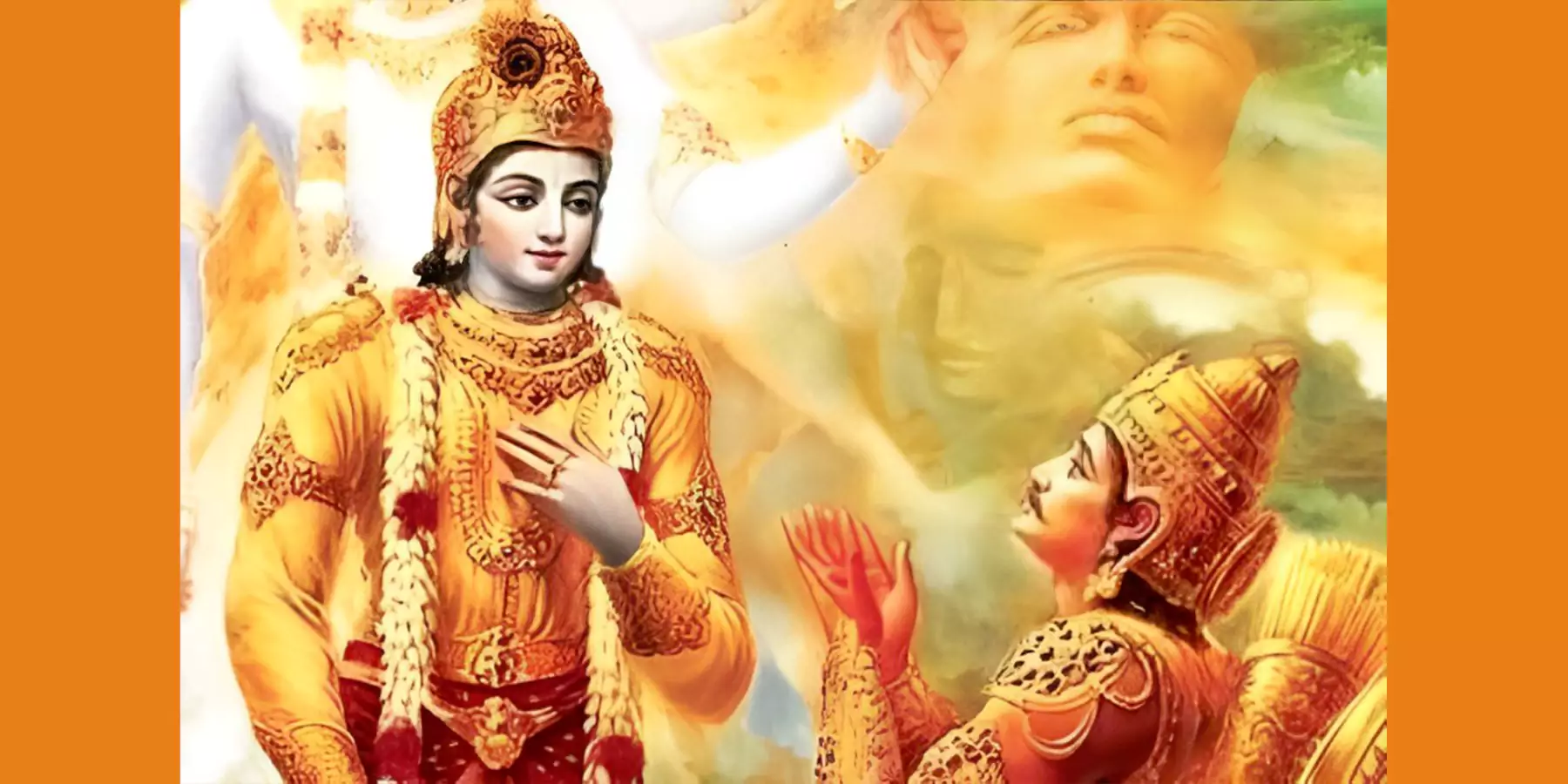
There is great practicality in the teachings of Bhagavad Gīta, since they are based on reasoning.

The Practicality of Bhagavān’s Teachings for Our World

“Sectarianism, bigotry and its horrible descendant, fanaticism, have long possessed this beautiful earth. They have filled the earth with violence, drenched it often and often with human blood, destroyed civilization, and sent whole nations to despair.”[1] These words from Swāmi Vivekananda’s speech at the World Parliament of Religions in 1893 lamented the damage to human society and evolution wrought by these varied forms of intolerance. Regrettably, his hope that fanaticism in all its forms would henceforth die has proved to be inaccurate. Faced with these forces in our daily lives, what are we to do?

In the context of increasing intolerance and a global pandemic, it is easy to become angry, sad, depressed, and anxious as we contemplate these events, but daily sādhana supports our ability to engage in śravanam, mananam, and nididhyāsana on the nature of sorrow as taught by Lord Kriśṇa. In today’s world, this is extremely relevant. Bhagavān’s very practical solution involves helping us appreciate why sorrow, or śocya, is unjustified under any circumstances. I believe that bigotry and fanaticism are crude attempts to find a genuine sense of self and security in an ever shifting and uncertain world. Therefore, Bhagavān’s teachings regarding the nature of the self and the inappropriateness of sorrow offer hope to humankind with a vision of unity and security that is inherent in us already. And, no extraordinary beliefs are required. Just the ability to employ our minds.

All human beings seek for an escape from the pain of seeing ourselves as a body/mind conglomeration. The problem with the path of seeking is the expectation of some future release that does not exist right now. It implies a joyous experience is not available to me now and that I have to obtain it at some future point. This is a trap. Since the Gīta is the milk of the Upaniśads, Bhagavān’s teachings to Arjuna are not just convincing but transformative for a person who is qualified enough to understand them. 

Bhagavān teaches us the true nature of the self is unchanging, self-effulgent consciousness in all states of experience independent of location or time. Consequently the justification for grief is removed. For the qualified student, realizing that anantam, limitless fullness, is the svarūpa of ‘I’, is only a question of knowledge, not seeking. Recognizing this, even as a basic starting point, is very liberating as a sense of relief washes over and we can rest more assuredly in the completeness of the self. 

In this awareness, there is no justification for śocya. Where is sadness and grief when we know our self as non-different from Brahman, non-different from Iśvara? Bhagavān also impresses upon Arjuna that even if we do experience ourselves as different from Iśvara, śocya is unjustified from the perspective of the jagat because it is the very nature of jagat to change. Being dependent on sat for its very being, the entire jagat is mithyā or asat, having only a relative existence. Its nature is constant change. We can verify this using our own senses. Absolutely everything in the world changes, sometimes at rates so slow we can’t detect the change, but it is happening at an atomic level. Given this realization, what is the justification for sorrow when the world indeed changes? That is its nature so there is no need for sorrow. Additionally, Bhagavān teaches Arjuna that the svarūpa of Ātman is akarta. We are merely actors playing roles. If we confuse ourselves with these many roles, grief results because we think ‘I’ is doing things. If we can be clear ‘I’ is akarta, again there is no justification for grief.

There is great practicality in these teachings since they are based on reasoning. We do need śraddha in śruti that Brahman is satyam, jñānam, anantam, but if we are prepared via karma yoga and have a purified antahkarana, Vedānta śastra as pramāṇa will just ‘work’, just as the eyes work when I open them, validating that initial śraddha.

[1] “Swami Vivekananda’s Speeches at the World ‘s Parliament of Religions, Chicago, 1893.” Belur Math Ramakrishna Math and Ramakrishna Mission, September 11, 2020. https://belurmath.org/swami-vivekananda-speeches-at-the-parliament-of-religions-chicago-1893/.

Distortions in Indian Historiography

Indeed, one of the symptoms of systematic history distortion has been the refusal to research the facts of the millennium-long oppression of Hinduism.

Distortions in Indian Historiography

The writing of India’s history in modern form started under British rule and continued in the first decades of Indian independence. In hindsight we may impute some limitations to it, but it was generally honest and up to the then prevailing international standards. From the 1970s onwards, however, the distortions of the historical record became fundamental, wilful and officially sanctioned, mostly with a distinct ideological motive. This was easily identifiable as anti-Hindu but presented itself as anti-Communal. We need to examine the circumstances behind this shift patronized by Indira Gandhi, her political secretary PN Haksar and her education minister Nurul Hasan. In doing this, we dispose of testimonies by eyewitnesses like SN , Dilip Chakrabarti and Sita Ram Goel, and investigators like Arun Shourie.

Contrary to expectation and rumour, the Narendra Modi government has so far perpetuated this situation, and all talk about “saffronisation” of education is sheer imagination. What is true, on the other hand, is that a far smaller problem of history distortion has subsisted in the margins among Hindu traditionalists, not with official support but with enough decibels to be publicly noticed. The two poles of infringement on conscientious historiography use one another in self-justification.

The Idea of India

Since some three millennia, visible already in the editing of the Mahābhārata, India had an ideal of political unification under a “universal ruler” or Cakravarti. This ideal was best approached in reality by Aśoka Maurya, then the Guptas and Moghuls, and most completely by Queen Victoria. But even in its worst periods of political fragmentation, India had a sense of cultural unity, embodied in the pilgrimage routes and the Sanskrit language. The ancient Greco-Roman or Arab visitors had no problem in recognizing the existence of an entity “India” or “Hind”. When the independence of British independence dawned on the horizon, historians in the mould of RC Majumdar emphasized this basic unity.

Against this, the English-speaking elite started propagating the same narrative that the colonialists had fed themselves: that there never was an India except in the atlas, that it was “not more a unity than the equator” (Winston Churchill), and that the colonizers had forged a new country. They called India “a nation in the making”, thus flattering Jawaharlal Nehru as a nation-builder, and bombarded an unsuspecting Mahatma Gandhi to “father of the nation”, whereas he had considered himself the humble son of an long-existing nation. Thus, the understanding of India became a major battlefield, still with us today in the writings of a Ramachandra Guha or a Shashi Tharoor. Here it is easy to set the record straight.

Decolonization

Before British colonial rule, West-Asians and Europeans considered India as a distant miraculous country, home of jewels and spices, and of knowledge. It attracted enterprising traders, motivated the journeys of discovery by Christopher Columbus and Vasco da Gama, and was a source of inspiration of writers and philosophers. Even the long centuries of Islamic rule, though they brought oppression and physical destruction, failed to penetrate the native culture and left at least India’s overall prosperity (though partly shifted towards the new ruling class) intact. During the 19th and 20th centuries, however, India fell from grace, stooping to the level of a mere colony, being profoundly impoverished and remoulded by its colonizer, moreover remaining a proverbial basket-case even a half-century after formal decolonization.

Following a current trend, we may zoom in on the questions around colonization: was the Islamic conquest a case of colonization? What were its distinctive characteristics vis-à-vis European colonization? Why have these resulted in very different Hindu attitudes toward Christianity and toward Islam? What was the role of Indians in their own colonization? What was cultural colonization, what is cultural decolonization? Which are current forms of subtle neo-colonization?

Muslim Rule

About the period of Muslim rule, which very frequently affirmed its Islamic character and motivation, the main controversy among historians (as well as political ideologues using history) concerns its record vis-à-vis the Hindu population and places of worship. Hindu polemicists bandy about a huge victim toll, citing e.g. historian KS Lal’s estimate (1979) of 80 million Hindus disappearing from the demographic figures between 1000 and 1525. The Muslim chronicles themselves boast of a huge victim toll, sometimes no doubt exaggerating but on the other hand leaving many incidents unreported. We can reasonably chart our way amid those data, all while acknowledging that lots of work concerning the tabulation and verification of these data remains to be done. Indeed, one of the symptoms of systematic history distortion has been the refusal to research the facts of the millennium-long oppression of Hinduism.

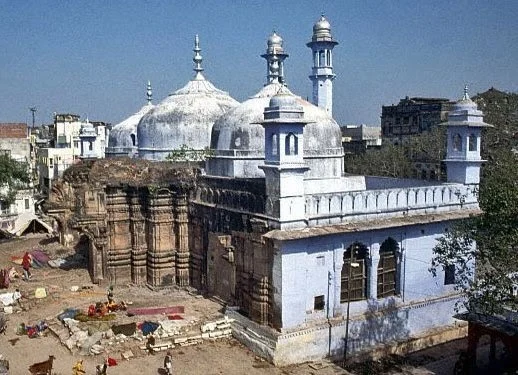
The record of destroyed temples is at any rate clear enough. Thousands of cases are reported candidly in the Muslim sources; the relatively limited attention in Hindu sources is typical for the pre-Holocaust embarrassment and consequent discreteness over national catastrophes. All over the world and throughout history, people have been reluctant to report on the catastrophes they had suffered, thinking it shameful to be on the losing side. Fortunately for the historians, the conquerors were more forthcoming, not to say boastful about what the modern age has renamed “crimes against humanity”. In many cases, part of the destroyed Hindu temple was kept visible in the new mosque built over it, with the purpose of showing off the victory of Islam over Paganism, e.g. the Babri Masjid and the Gyanvapi Masjid built over the Rama Janmabhumi in Ayodhya c.q. the Kashi Vishwanath in Varanasi. We may zoom in on the remarkable and very consequential Ayodhya debate, vivid for decades but recently terminated; and on US historian Richard Eaton’s attempt to shift the blame for these Islamic crimes to the Hindu victims themselves.

Another case study is the whitewash given to the Moghul emperor Aurangzeb by a US scholar historian. It fits in with a general approach to Communal conflict pioneered since the 1970s by historians like RS Sharma, Romila Thapar and Irfan Habib. To deconstruct this doctrine of denial, we will first of all endeavour to understand it on its own terms, then to compare it with the data.

Problems on the Dharmic Side

Finally, we should not leave the Infidel side off the hook too easily. There has been a certain laziness in the anti-negationist camp. Yes, the authorities refused to patronize research into communally sensitive topics; but there were ways to organize, for example, an actualization of KS Lal’s dramatic figures. There have been individual initiatives, like the excellent publications of Meenakshi Jain or of outsiders to academe such as Sandeep Balakrishna or Aravinda Neelakandam; but the magnitude and importance of this controversy warrants a more systematic endeavour. (Along the same lines, most Hindus participating in the Indo-European Homeland polemic, whether necessitating an “Aryan invasion” or not, have shown themselves smug and ineffective relative to how grimly this issue has become a weapon in the hands of their declared enemies, and how promisingly the argumentative equation has evolved.)

There has also been a marked sloppiness on the Hindu side in construing the historical data of the Islamic oppression of Hinduism. They loosely speak of a “genocide”, no less, even of a “Holocaust”. There are significant similarities between Holocaust denial and the present denial of Islam’s anti-Hindu campaign, which can both be called Negationism, but it doesn’t follow that the crimes committed are the same. Diplomatically, this neglect of the differences is risky and may provoke a backlash from other victim groups, who ought to be allies. More importantly for the historian, it may be an inaccurate rendering of the data and certainly of the intention behind the facts, deplorable though these are. Genocide is not just a matter of acts perpetrated but also of the intention behind the acts. Did Islam evince a desire to kill all Hindus, or did it rather formulate a desire to rule the world and thus justify an occasional destruction and killing as instruments to that less genocidal goal?

The anti-Hindu campaigns by certain invaders are the topic of a consequential debate. We intend to encourage research into this subject, and to cleanse the conceptual assumptions behind it.

Koenraad Elst

Cover Image: Creative Commons License
(The cover image is of Gyanvapi Mosque built by destroying a Hindu temple. The partial remains of the Hindu temple are visible under the mosque on one side.)

Mitra! Ask me anything!