









Śrī Gurubhyo Namaḥ! 🙏🏽🙏🏽
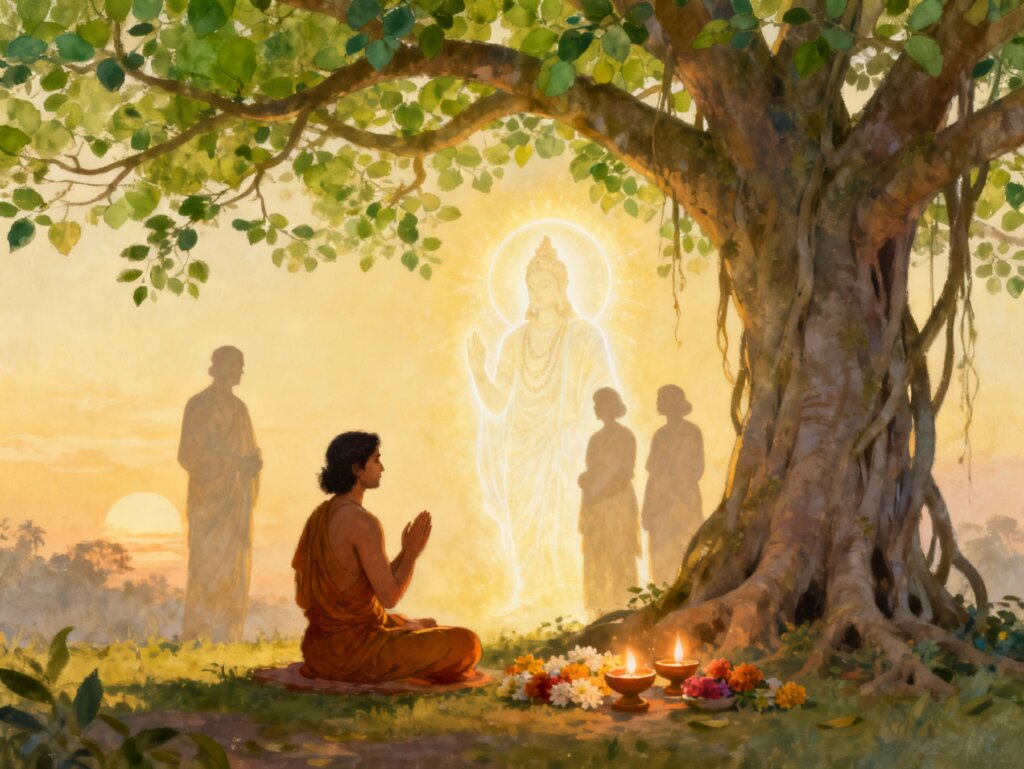
Thanksgiving: The American Context
Thanksgiving is widely celebrated in the United States as a day of gratitude, family gatherings, and shared meals. Yet its historical roots are complex. The familiar narrative of harmony between early European settlers and Native Americans often conceals a more painful reality — a history marked by betrayals, broken treaties, displacement, violence, and the devastation of Indigenous peoples and cultures. For many Native American communities, it need not merely be a harvest celebration but a reminder of loss, resistance, and survival.
Recognizing this fuller history allows the day to be reframed with honesty and compassion. It becomes an opportunity not only for personal gratitude but also for mindful remembrance, for honoring the resilience of Indigenous peoples, and for reaffirming a commitment to justice. Approached with awareness, Thanksgiving can evolve into a day that embraces truth, reconciliation, and universal gratitude — values deeply resonant with the Vedic vision of ṛta, satya, and dharma.
Gratitude In the Hindu Paradigm
In the Vedic worldview, thankfulness is not a day; it is a way of being. Gratitude (kṛtajñatā) is woven into the very texture of Hindu thought—directed first to the Supreme, then inward to the indwelling Divine, and outward to teachers, parents, friends, and society. This Attitude of Gratitude, marks not just our rituals at an adibhautika level where we offer oblations to the Gods in gratitude; our mantras transcend the adibhautika boundaries — to percolate down to our day to day Laukika practices on one hand, and, to become symbols of cosmic thanksgiving at the Adidaivika level.
This American Thanksgiving, we look at select verses from the Vedas and allied scriptures to remind ourselves of the noble lineage of gratitude from which we Hindus descend.
Gratitude to the Supreme Presence
Our ancients began all thanksgiving with an invocation to Hiraṇyagarbha, the radiant source from whom creation unfolds. The Hiraṇyagarbha Sūkta of the Ṛgveda (10.121) is one of humanity’s earliest hymns of cosmic thanksgiving.
- हिरण्यगर्भः समवर्तताग्रे भूतस्य जातः पतिरेक आसीत् ।
सदाधार पृथिवीं द्यामुतेमां कस्मै देवाय हविषा विधेम ॥ (RV – 10.121.1)
hiraṇyagarbhaḥ samavartatāgre bhūtasya jātaḥ patireka āsīt |
sadādhāra pṛthivīṃ dyāmutemāṃ kasmai devāya haviṣā vidhema ||
Meaning: In the beginning was Hiraṇyagarbha—the radiant cosmic source, the first-born Lord of all beings. It is He who upholds earth and heaven. To that Supreme Deva, we offer our praise and thanks. - य आत्मदा बलदा यस्य विश्व उपासते प्रशिषं यस्य देवा: ।
यस्य छायाSमृतं यस्य मृत्यु: कस्मै देवाय हविषा विधेम ॥ (RV – 10.121.2)
ya ātmadā baladā yasya viśva upāsate praśiṣaṃ yasya devāḥ |
yasya chāyāSmṛtaṃ yasya mṛtyuḥ kasmai devāya haviṣā vidhema ||
Meaning: He who grants knowledge and strength, who governs all beings; in whose shelter lies
immortality and whose shadow is mortality itself—to Him, we offer our thanks.
- यः प्राणतो निमिषतो महित्वैक इद्राजा जगतो बभूव ।
य ईशे अस्य द्विपदश्चतुष्पद: कस्मै देवाय हविषा विधेम ॥(RV – 10.121.3)
yaḥ prāṇato nimiṣato mahitvaika id rājā jagato babhūva |
ya īśe asya dvipadas catuṣpadaḥ kasmai devāya haviṣā vidhema ||
Meaning: He who rules over all that breathes and blinks, the sovereign of bipeds and quadrupeds—
to Him we offer our thanks.
- येन द्यौरुग्रपृथिवी च दृळ्हा येन स्व: स्तभितं येन नाक: ।
यो अन्तरिक्षे रजसो विमान: कस्मै देवाय हविषा विधेम ॥
yena dyaur ugrā pṛthivī ca dṛḷhā yena svaḥ stabhitaṃ yena nākaḥ |
yo antarikṣe rajaso vimānaḥ kasmai devāya haviṣā vidhema ||
Meaning: By whom the heavens are upheld and the earth made firm; who pervades all space with
His radiant presence— to that Supreme Being we offer our thanks.
As can be seen from the verses, gratitude is the essence at both the ādhibhautika and ādidaivika levels
Gratitude to the Divine Within
If the Vedas honor the cosmic source, the Bhāgavata Purāṇa turns our attention inward—to the Lord who enlivens our senses, thoughts, and actions.
Śrīmad-Bhāgavata Says:
- योऽन्त: प्रविश्य मम वाचमिमां प्रसुप्तां
संजीवयत्यखिलशक्तिधर: स्वधाम्ना ।
अन्यांश्च हस्तचरणश्रवणत्वगादीन्
प्राणान्नमो भगवते पुरुषाय तस्मै ॥
yo’ntaḥ praviśya mama vācam imāṃ prasuptāṃ
saṃjīvayaty akhila-śaktidharaḥ svadhāmnā |
anyāṃś ca hasta-caraṇa-śravaṇa-tvag-ādīn
prāṇān namo bhagavate puruṣāya tasmai || (SB – 1.7.6)
Meaning: O Lord who resides within! You awaken my dormant speech and empower my limbs and senses. My humble salutations to You—the Inner Controller, the Life of my life.
This verse urges us to recognize the quiet miracle of waking each day with breath, thought, and purpose — and to consciously direct our actions toward the welfare of all beings.
On Thanksgiving, this verse urges us to recognize the quiet miracle of waking each day with breath, thought, and purpose; and to consciously do what’s best for the good of all beings.
Gratitude to the Guru, Parents, and Teachers
In the Vedic civilization, gratitude flows through a sacred lineage—Guru, Mātā, Pitā, Ācārya. Here are some famous verses on revering them — not from the Vedas directly, but deeply rooted in the unbroken Vedic tradition.
- Guru-stuti from Guru-aṣṭakam from the Śaṅkara tradition
अज्ञानतिमिरान्धस्य ज्ञानाञ्जनशालाकया ।
चक्षुरुन्मीलितं येन तस्मै श्रीगुरवे नम: ॥
ajñāna-timirāndhasya jñānāñjana-śalākayā |
cakṣur unmīlitaṃ yena tasmai śrī-gurave namaḥ || (Guru-aṣṭakam)
Meaning: The Guru who opens the eyes of one blinded by the darkness of ignorance with the collyrium-stick of knowledge—my reverent salutations to that Guru. - A traditional Vedic salutations for used in daily saṃkalpa and snāna-mantras from Śrauta/Smārta tradition
ॐ मातृभ्यो नमः ।
ॐ पितृभ्यो नमः ।
ॐ आचार्येभ्यो नमः ।
om mātṛbhyo namaḥ |
om pitṛbhyo namaḥ |
om ācāryebhyo namaḥ ||
Meaning: Salutations to my mother, to my father, and to all my teachers. - A verse from on the qualities of a true Guru from Vivekacūḍāmaṇi attributed to Ādi Śaṅkarācārya
श्रोत्रियोऽवृजिनोऽकामहतो यो ब्रह्मवित्तम: ।
ब्रह्मण्युपरतः शान्तो निरींधन इवानल: ।
अहेतुकदयासिन्धुर्बन्धुरानमतां सताम् ॥ (Vivekacūḍāmaṇi – 33)
śrotriyo’vṛjino’kāmahato yo brahmavittamaḥ |
brahmaṇyuparataḥ śānto nirindhana ivānalaḥ |
ahetuka-dayā-sindhur bandhura ānamatāṃ satām ||
Meaning: The true Guru, rooted in the Veda, untainted, desireless, peaceful, like a fire needing no fuel, an ocean of causeless compassion, is the unfailing friend of all sincere seekers.
Gratitude to Noble Friends
No Vedic Thanksgiving is complete without honoring those who accompany us through joy and difficulty. Here is a classical Subhāṣita, not from any single Purāṇa; but often quoted in Subhāṣita-ratna-bhāṇḍāgāra.
- पापान्निवारयति योजयते हिताय
गुह्यं निगूहति गुणान् प्रकटी करोति।
आपद्गतं च न जहाति ददाति काले
सन्मित्रलक्षणमिदं प्रवदन्ति सन्ताः ॥
pāpān nivārayati yojayate hitāya
guhyaṃ nigūhati guṇān prakaṭīkaroti |
āpadaṃ ca na jahāti dadāti kāle
san-mitra-lakṣaṇam idaṃ pravadanti santāḥ ||
Meaning: The noble say: A true friend restrains us from wrong, encourages us toward the good, guards our secrets, highlights our virtues, never abandons us in adversity, and helps at the right time.
Gratitude to the Nation In US
The Ṛgveda also offers a timeless blessing for the nation in which we live or into which we are born.
- राष्ट्रं धारयतां ध्रुवम् । (RV – 10.173.5)
rāṣṭraṃ dhārayatāṃ dhruvam ||
May this nation stand firm and prosperous.
Thanksgiving in the Vedic view is not only emotion—it is practice.
Thanksgiving in Action: Tapas, Yajña, Dāna
In the Hindu paradigm, the three pillars that shape a life of gratitude are:
Tapas – Contemplation, self-discipline, and inner refinement that bring clarity and peace.
Yajña – Sacred offering—fivefold in daily life:
- Brahma-yajña: study, reflection
- Pitṛ-yajña: honoring parents and ancestors
- Deva-yajña: worship and homa
- Bhūta-yajña: care for animals and the environment
- Manuṣya-yajña: hospitality and service to humanity
Dāna – Generosity, compassion, forgiveness, and sharing—expressions of our awareness that everything is given to us.
These actions matter more than form or ritual detail; they shape the heart and refine one’s inner disposition.
Ācāra — The Culture of Gratitude
Right conduct (ācāra) is the outward expression of an inner attitude aligned with dharma. Vedic paradigm instills this in many different ways. Our practices may arise from:
- kula-ācāra — family traditions
- deśa-ācāra — regional customs (the tradition of celebrating American Thanksgiving in gratitude with family and friends)
- śiṣṭa-ācāra — conduct of noble people
- sad-ācāra — guidance of scriptures
- guru-vākyas — counsel of mentors and elders
When in doubt, our elders taught: Follow the way of the noble (śiṣṭa-ācāra). This, too, is a form of Thanksgiving — gratitude toward society and civilization.
Conclusion: A Vedic Thanksgiving
The Vedas and other scriptures remind us that every blessing in our lives flows from countless visible and invisible sources: the Supreme Reality, the life-force within us, our teachers, parents, friends, and the society that nourishes us. As Hindus residing in America, this American Thanksgiving, may we remember:
– the cosmic Source that sustains the universe,
– the inner Light that animates our breath,
– the teachers who guide us,
– the friends who uphold us,
– the nation that shelters us,
– and the practices that elevate us.
Gratitude is not a season; it is a sādhana — a disciplined way of living.
May this spirit of Vedic kṛtajñatā illuminate our hearts throughout the year.
Hari Om!
Note: The original concept and selection of verses were shared by HUA faculty Shri. Sree Aswath ji, and the piece was edited and expanded by his student, Smt. Jyoti Suravarjula.