










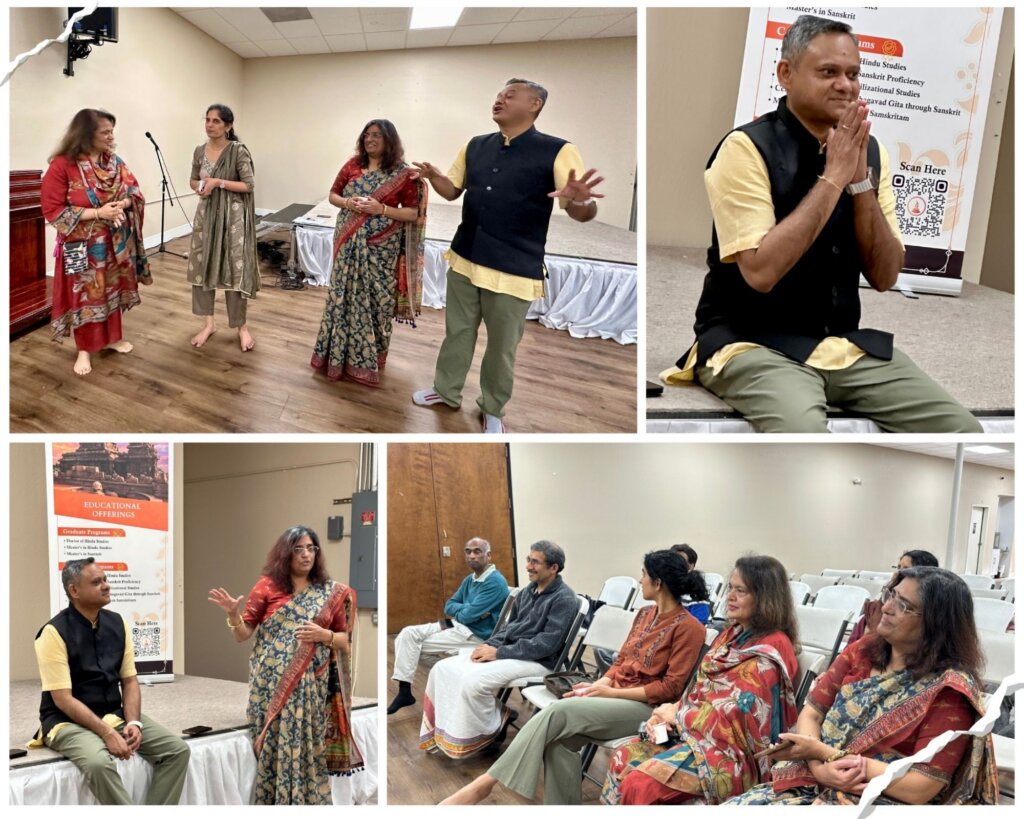
Last evening, the Friends of HUA Bay Area hosted a wonderful gathering at the Veda Temple in Milpitas, California, where I had the opportunity to speak on the topic “Ayurveda – The Wisdom of Wellbeing.” It was part of a free speaker series organized to introduce the community to the timeless insights from the Hindu University of America and their relevance in modern life. The event brought together a curious and engaged audience, and what followed was a lively and interactive discussion about one simple but profound question: How do we know if we are truly healthy?
Rethinking the Meaning of Health
At the beginning of the talk, I asked the audience a simple question:
“How many of you think you are healthy?”
Many hands went up. But when the follow-up question came—
“How do you know?”
—people paused.
In modern medicine, we often define health in terms of lab results or absence of disease. The World Health Organization (WHO) offers a broader definition – Health is a state of complete physical, mental and social well-being and not merely the absence of disease or infirmity. While this definition is more holistic, Ayurveda goes even deeper.
The Ayurvedic Definition of Health
Ayurveda defines health through a famous verse from classical texts:
“Samadosha samaagnishcha samadhathu malakriya |
Prasannatma indriya manas swastha ityabhi diyate ||”
This can be translated as:
A person is considered healthy (Swastha) when:
- The three doshas (Vata, Pitta, Kapha) are in balance
- The digestive fire (Agni) is functioning properly
- The tissues (Dhatus) are balanced
- Waste elimination (Malas) is normal
- The mind, senses, and spirit are content and peaceful
This definition is remarkable because it describes health as a dynamic state of balance, rather than simply the absence of illness.
In Ayurveda, the word Swasthya literally means: “Established in the Self.” Health is therefore not just biological – it is physical, mental, emotional, and spiritual harmony.
Measuring Health – The Swasthya Questionnaire
To help people reflect on their current state of health, we discussed the Ayurveda Swasthya Questionnaire, which looks at indicators such as:
- Regular appetite and good digestion
- Proper bowel and urinary elimination
- Restful sleep and waking refreshed
- Clear functioning of the senses
- Good energy and stamina
- Mental clarity and emotional balance
These markers reflect the Ayurvedic understanding that health begins with digestion, lifestyle rhythm, and mental wellbeing.
Unlike many modern health assessments that only look at disease risk, this approach encourages individuals to ask:
“How balanced is my body and mind today?”
Ayurveda and Modern Preventive Medicine
Interestingly, modern healthcare is beginning to move in a direction that Ayurveda has emphasized for thousands of years. One emerging model is called P4 Medicine, which stands for:
- Predictive – identifying risks before disease appears
- Preventive – focusing on lifestyle and early intervention
- Personalized – recognizing that each person is unique
- Participatory – encouraging individuals to actively engage in their own health
Ayurveda has long embraced these principles through its understanding of Prakruti, or individual constitution.
Understanding Your Prakruti
One of the highlights of the session was introducing the concept of Prakruti.
In Ayurveda, every individual is born with a unique body–mind constitution, determined by the relative balance of the three doshas:
- Vata – movement, creativity, and communication
- Pitta – transformation, metabolism, and leadership
- Kapha – stability, endurance, and nurturing
Understanding your Prakruti helps answer questions such as:
- Why do people respond differently to the same food or environment?
- Why do some people thrive in high-pressure environments while others struggle?
- Why do certain people naturally gravitate toward creativity, leadership, or stability?
Knowing your constitution allows you to make personalized lifestyle choices—a core idea in both Ayurveda and modern personalized medicine.
The Value of Understanding Doshas
When we understand doshas, we begin to see behavior differently.
Instead of labeling people as difficult or stubborn, we recognize underlying tendencies:
- Vata imbalance → restlessness, distraction
- Pitta imbalance → impatience, anger
- Kapha imbalance → resistance, inertia
This awareness can improve:
- Relationships
- Team dynamics
- Work environments
- Self-understanding
Knowing your Prakruti—and the Prakruti of those around you—can help you navigate life with greater compassion and effectiveness.
The Goal: Living in Swasthya
Ultimately, Ayurveda is not about labeling people as Vata, Pitta, or Kapha.
The real goal is Swasthya—living in balance and becoming the best version of yourself.
When we understand our natural tendencies, we can make better choices in:
- Food and nutrition
- Daily routines
- Stress management
- Relationships
- Work and lifestyle
In doing so, we align with Ayurveda’s timeless wisdom: Health is not something we chase. It is something we cultivate through balance.
Concluding Remarks
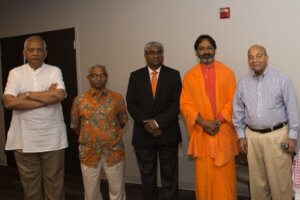
The evening concluded on a particularly uplifting note with a blessed interaction with Brahma Sri Marepalli Naga Venkata Sastri from the Sri Satyanarayana Swamy Devasthanam. We had the privilege of spending time together in discussion and reflection on dharma, wellbeing, and the timeless wisdom of the Vedic traditions. Joining this interaction were several HUA and CCA faculty members and students, making it a meaningful moment of learning, community, and shared commitment to preserving and sharing these sacred knowledge traditions.
The Friends of HUA Bay Area event was a wonderful reminder that these ancient teachings continue to resonate deeply with modern audiences. The engaging questions, laughter during the dosha story, and thoughtful discussions afterward made it a truly memorable evening. I am grateful to everyone who attended and look forward to many more opportunities to explore the wisdom of Ayurveda together.
In health and balance always,
Mahadevan Seetharaman, PhD
Dean, California College of Ayurveda (CCA)
Hindu University of America (HUA)
Mahadevan.Seetharaman@hua.edu