






Courses Taught By Dr. Suryanarayana Nanda

Explore our comprehensive curriculum designed to deepen your understanding of ancient texts, languages, and philosophies.

Featured Image

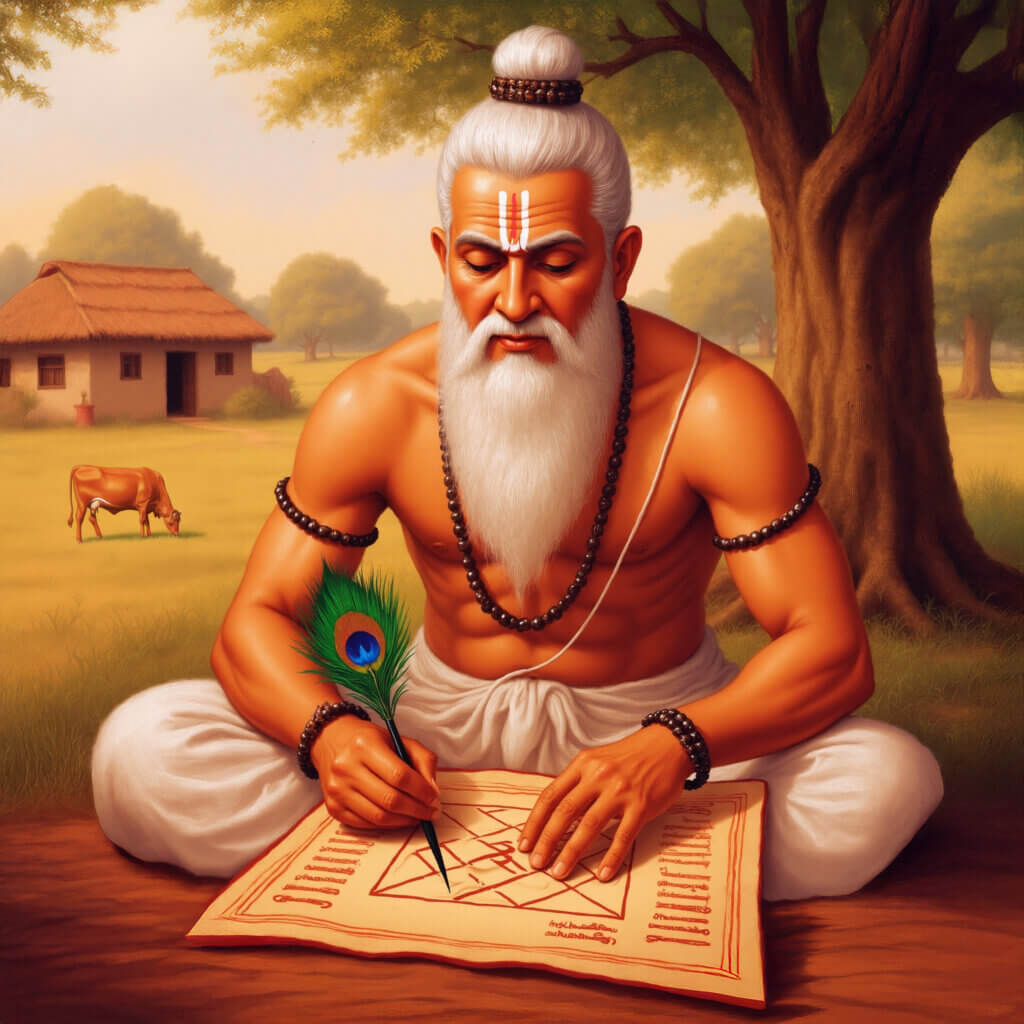
Introduction to Manusmriti – Chapter 1: Origins of Dharma and Creation

TAT3000 – This course offers a focused exploration of Chapter 1 of the Manusmriti (also known as the Manava Dharmashastra), one of the foundational texts of ancient Indian legal and moral philosophy. Chapter 1 serves as the prologue to the Manusmriti and lays the groundwork for understanding the cosmic origins of Dharma (righteous duty), the structure of society, and the divine basis of moral law. Students will examine the mythological and philosophical narrative of creation, the emergence of the four varnas (social classes), and the role of Manu as the first lawgiver and progenitor of humanity. The course will also introduce key Sanskrit terminology and themes such as Dharma, ritual order, varna, and cosmic law. Students will engage with the original Sanskrit verses alongside translations and critical perspectives to develop a nuanced understanding of the text. The module encourages both traditional interpretation and modern critical inquiry, making it suitable for students interested in textual analysis, ethical philosophy, religious tradition, and socio-legal history.
Featured Image

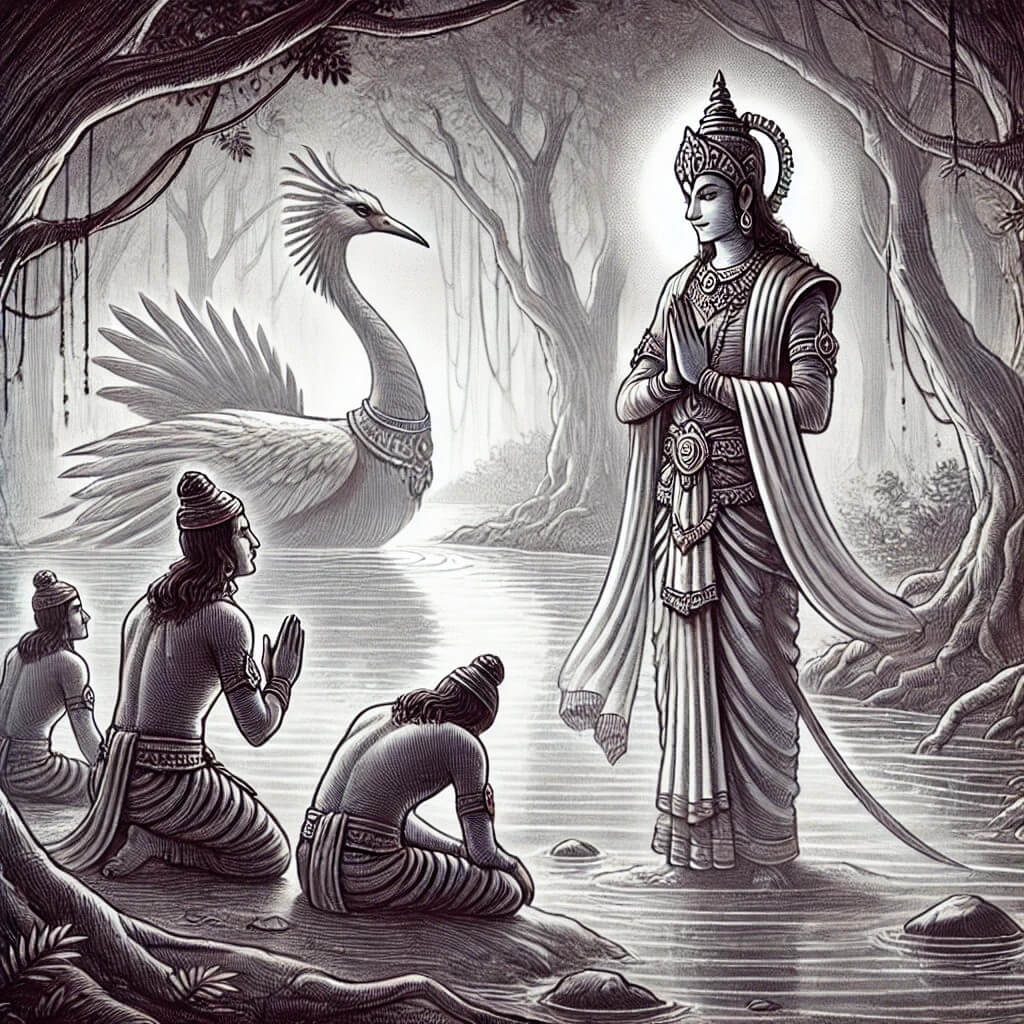
Wisdom at the Lake: Unraveling Yaksha-Prashna

SAN2001 – The Yakṣa-yudhiṣṭhira-saṁvāda from the Mahābhārata’s Vana Parva is a profound philosophical dialogue where Yudhiṣṭhira engages with a Yakṣa, answering questions on dharma, wisdom, and morality. This course offers an in-depth study of selected verses from this celebrated episode, focusing on recitation, grammatical structure, and interpretative analysis (anvaya, vyākhyā). Through this examination, students will deepen their understanding of Sanskrit literary traditions while honing their linguistic and analytical skills. By engaging with these timeless teachings, participants will cultivate an appreciation for the intellectual and ethical depth of Sanskrit literature, enriching both their cultural insight and scholarly acumen.
Featured Image

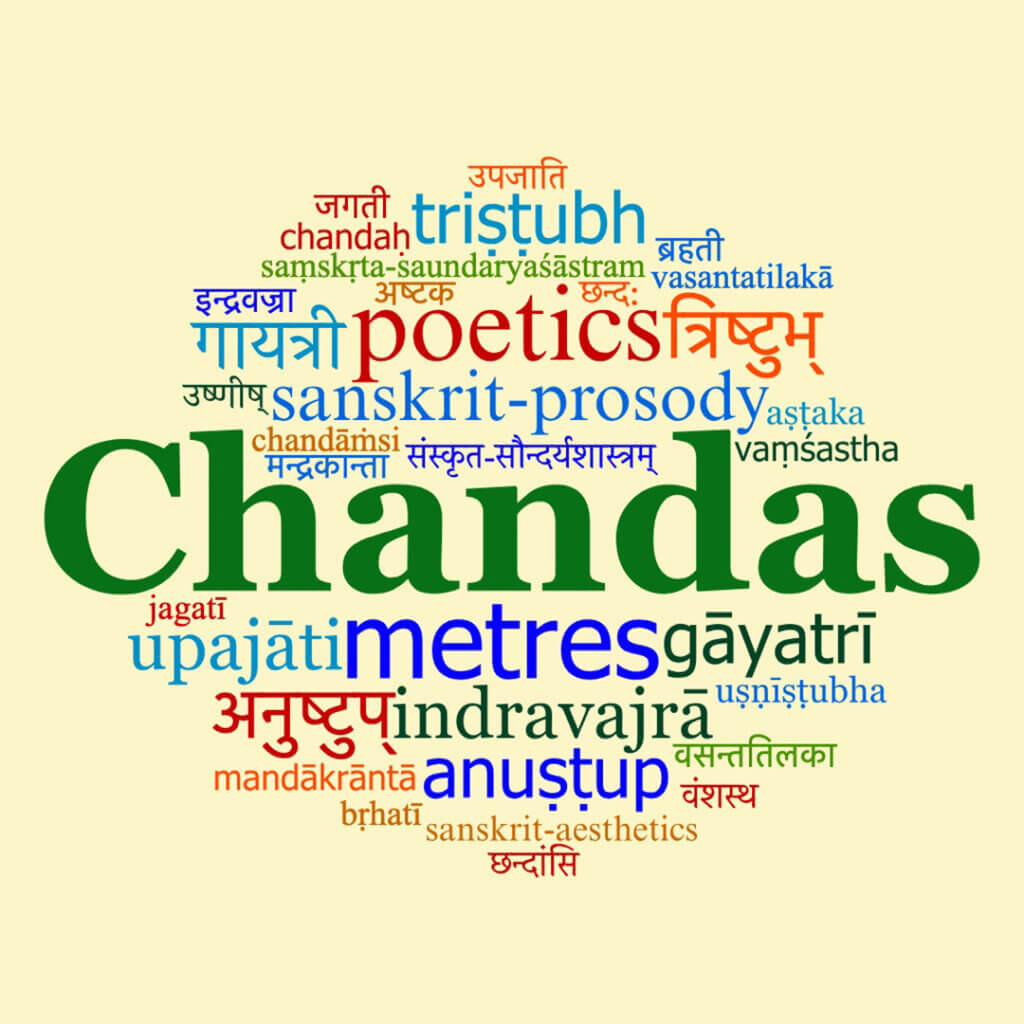
Exploring Chandas

SAN2002 – This course offers an in-depth study of Sanskrit prosody (छन्दः), focusing on both Vedic and laukika meters. Students will examine the characteristic features (laksana) and practical applications (prayoga) of these poetic structures. The curriculum covers the principles of laghu (light) and guru (heavy) syllables and introduces key concepts such as Gaṇa parichaya—the patterns of light and heavy syllables in sequences. Additionally, the course explores three forms of verse: syllabic (akṣara-vṛtta), syllabo- quantitative (varṇa-vṛtta), and quantitative (mātrā-vṛtta). This systematic approach enhances linguistic skills, aids memorization, and deepens understanding of the literary and aesthetic dimensions of Sanskrit poetry.
Featured Image

Conversational Sanskrit IV

SAN0004 – The fourth and final course in the Micro Certificate in Conversational Sanskrit for Hindu Studies (MCCS) concludes this well-structured program in spoken Sanskrit, equipping students with proficiency in the language. At this stage, students will be able to understand and summarize long Saṃskṛtam speeches. They will also have the skills to use passive and impersonal voices in sentence formation and incorporate them into conversations. This course marks the culmination of the program, and students will have developed the necessary proficiency to engage in live debates with their classmates and create skits based on real-life scenarios.
Featured Image

Conversational Sanskrit III

SAN0003 – The third course in the  Micro Certificate in Conversational Sanskrit for Hindu Studies (MCCS), aspires to facilitate the students to become fluent in conversational Sanskrit. During this course, students will listen to news clips, comprehend them and be able to summarize the news in Saṃskṛtam (Sanskrit). They also learn to efficiently employ active voice in sentence formation and apply it in daily conversations. By the end of the course, students will have developed sufficient proficiency in spoken Sanskrit to be able to debate on a prepared topic with their cohorts during class. They will wrap up the quarter by synthesizing and performing a skit based on a preselected story.
Featured Image

Conversational Sanskrit I

SAN0001 – The first course in the Micro Certificate in Conversational Sanskrit for Hindu Studies (MCCS) aims to help students develop a good level of comfort and fluency in speaking Sanskrit (Saṃskṛtam), while minimizing grammatical errors. Throughout this course, students will develop the necessary skills to comprehend sentence structure and effectively use prepositional phrases in order to construct more elaborate conversations. They will also learn to paraphrase customized sets of dialogues provided to them and while expanding their vocabulary. By the end of the course, students will have acquired enough proficiency in Sanskrit to collaboratively create and perform a skit with their peers. The medium of instruction for this course will primarily be in Sanskrit, with translations provided in English only when necessary. This will ensure that students become well-versed in spoken Sanskrit.
Featured Image

Conversational Sanskrit II

SAN0002 – The second course in the  Micro Certificate in Conversational Sanskrit for Hindu Studies (MCCS), Conversational Sanskrit II, aims to enable students to become conversant in Sanskrit (Saṃskṛtam). During this course, students will practice reciting verses in Sanskrit. They will learn to correctly apply tenses and moods in sentences to communicate their thoughts. By the end of the course, students will have acquired sufficient proficiency in Sanskrit to produce a grammatically correct transcript for a skit that they will perform. The medium of instruction for this course will be Sanskrit, providing an environment where the students feel completely at ease conversing in spoken Sanskrit and fully immerse in it. 
Mitra! Ask me anything!