









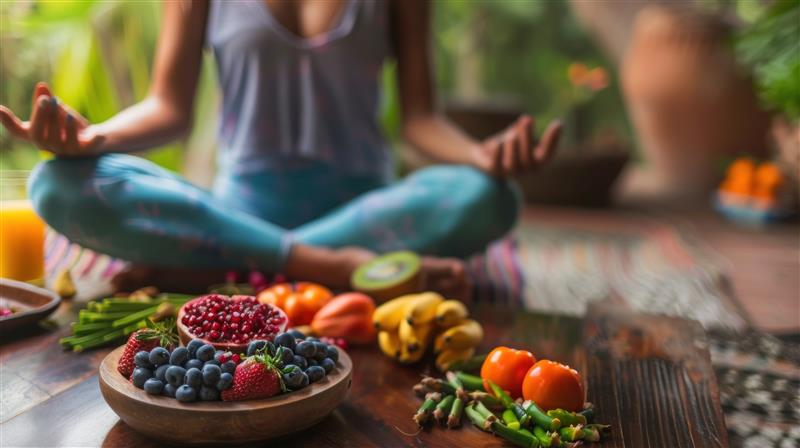
[Rooted in wisdom, moving through a global life—SVASTA invites wholeness not by escape, but by integration.]
How does knowledge or well-being move from concept to lived experience in global, layered lives?
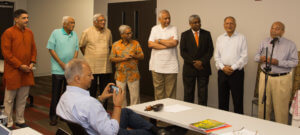
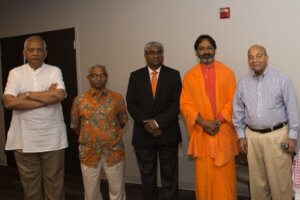
This reflection emerges from my preparation for a panel discussion titled “Svasta in a Global Life: Well-Being Beyond Wellness Trends,” thoughtfully organized by Smt. Satyavani Kakarla. I am deeply grateful to my fellow panelist, Dr. Prasad Kaipa, for a rich and expansive conversation. Together, we explored how knowledge—particularly from Indian wisdom traditions—travels from idea to embodiment in modern global lives. We shared experiences, examined where intentions collide with real-world practice, and reflected on what allows these ideas to remain meaningful and continuous over time. This blog carries forward that inquiry—especially for students, practitioners, and members of the diaspora connected to institutions like the California College of Ayurveda and Hindu University of America—who are navigating ancient knowledge in contemporary contexts.
A Paradox of Our Time
We live in an era of unprecedented access to wellness knowledge. Yoga studios and meditation apps are ubiquitous. Ayurvedic herbs are sold in capsules and gummies. Intermittent fasting protocols trend on social media. Sleep, breath, and stress are endlessly discussed and “optimized.” And yet, as a society, we are not demonstrably healthier, more aware, or happier. Chronic disease, anxiety, metabolic disorders, loneliness, and burnout continue to rise—both in the West and in India. Healthcare spending grows, but outcomes stagnate. For the diaspora, this paradox can feel especially stark: surrounded by the language of wellness, yet deeply disconnected from rhythm, community, and meaning. This gap invites an uncomfortable but necessary question: If we are doing so many “right” things, why are the outcomes still so poor?
From Wisdom to Techniques
One possible answer lies not in the inadequacy of the practices themselves, but in how they are implemented. Knowledge remains abstract when it is treated as something we use rather than something that shapes how we live. Yoga practiced once or twice a week for stress relief may improve flexibility, but it rarely changes how we relate to ambition, rest, or attention throughout the day. Mindfulness practiced for a few minutes does little if the rest of life is governed by speed, urgency, and constant stimulation. In global, layered lives—marked by travel, time-zone shifts, professional pressure, and cultural hybridity—well-being is often approached through symptom management. We look for techniques that can be inserted into busy schedules, rather than allowing wisdom to reorganize how time itself is lived.
The Core Issue: Fragmentation
Modern wellness culture excels at extraction Practices are removed from their philosophical, ethical, and rhythmic contexts and repackaged as standalone tools:
- Mindfulness without ethical orientation
- Yoga without restraint or self-study
- Nutrition without rhythm or seasonality
- Herbs without food culture
- Fasting without discernment
We may meditate at work to improve focus, take probiotics for gut health, and exercise for fitness—yet still feel exhausted or unsettled because these practices do not form a coherent way of living. Fragmentation allows us to do more without necessarily being more whole.
Mindfulness: Inserted, Not Lived
Mindfulness today is often inserted into life rather than woven through it. We see mindfulness minutes to kick off meetings, Apple Watch reminders to breathe, apps with streaks, corporate calm rooms, guided pauses between emails, and breathing exercises before high-pressure decisions.Yet outside these moments, people multitask while eating, scroll through phones late into the night and first thing in the morning, rush conversations, and equate busyness with value. Awareness is practiced for minutes, while the rest of the day is driven by speed, urgency, and stimulation. Mindfulness becomes a tool to tolerate unhealthy rhythms—not a way of relating to time, attention, consumption, or relationships.
Yoga Reduced to the Mat
Yoga today is largely reduced to āsana practice, even though postures form only a small part of Patañjali’s framework. Most classes, studios, and apps emphasize flexibility, strength, and calorie burn. The deeper limbs—yama, niyama, pratyāhāra, dhāraṇā, dhyāna, and samādhi—are rarely discussed or lived. People may attend yoga class regularly yet rush meals, overwork, overstimulate the senses, and carry chronic restlessness. Yoga becomes something done on a mat for an hour, rather than a discipline shaping conduct, restraint, attention, and relationship to life. The body improves; the deeper causes of imbalance remain untouched.
Ayurveda Without Lifestyle
Herbal supplements, probiotics, and prebiotics are now embedded in modern wellness culture—capsules, powders, fortified foods promising targeted benefits. Yet they are often consumed alongside ultra-processed diets, irregular meals, late-night eating, chronic stress, and poor sleep. Herbs are reduced to active ingredients. Digestion is framed as a biochemical problem rather than a lived relationship with food, timing, and environment. What was once integrated into cuisine, routine, and community becomes pharmaceuticalized. Without changes in how we eat, rest, and live, these interventions function as compensations—supportive at best, but insufficient for lasting balance.
Fasting, Diets, and Lost Discernment
Fasting, cleanses, and diets are widely adopted as short-term interventions: intermittent fasting schedules, detox programs, juice cleanses, restrictive plans promising rapid results. Yet they are layered onto lives marked by irregular sleep, excessive screen time, and chronic stress.
People may fast for sixteen hours, then overeat late at night or eat while distracted. In traditional systems, restraint was embedded within rhythm, seasonality, and discernment—not willpower alone.
Dinacharya as a Checklist
Daily practices such as oil pulling, tongue scraping, abhyanga, and morning routines are increasingly popular. Yet they are often practiced mechanically. People may complete these rituals in the morning, then rush through the day, skip meals, work late, and sleep inconsistently. Detached from their larger intent—alignment with light, digestion, rest, and attention—Dinacharya becomes a checklist rather than a lived rhythm.
A Pattern Beyond Health
This fragmentation is not limited to personal well-being. We see it in environmental action—recycling, electric cars, carbon offsets—while continuing to consume beyond planetary limits. Natural resources are managed but not respected. Relationships are supported by tools and therapy, yet time, presence, and shared rhythms erode. Across domains, the pattern is the same: fixing symptoms without changing how life is organized.
SVASTA: A Different Orientation
SVASTA—being established in oneself—offers a different lens. It does not ask us to add more practices. It asks us to live differently. The solution is not to abandon yoga, mindfulness, herbs, fasting, or daily routines, but to restore their coherence as ways of living, not tools for fixing problems. Well-being improves when practices shape how time is organized, how choices are made, and how the body is listened to—every day, not occasionally. Integration means fewer techniques, deeper commitment, and alignment with natural rhythms rather than constant optimization.
From Speed to Rhythm
This is ultimately a shift from speed to rhythm
- Slowing the pace of daily life, not just the breath
- Practicing mindfulness while eating, walking, and speaking—not only meditating
- Protecting sleep timing as non-negotiable
- Eating at regular times, with attention and gratitude
- Reducing stimulation—screens, noise, multitasking
- Buying less and choosing with discernment
- Letting values, not convenience, guide choices
These are not dramatic interventions. They are quiet reorientations.
What Allows Continuity Over Time
Ideas remain meaningful when they are simple enough to live daily, flexible enough to adapt to life’s changes, and rooted in values rather than outcomes. Practices last when they are humane and forgiving—not rigid ideals that create guilt or pressure. Continuity comes from embedding wisdom into ordinary life—meals, sleep, work rhythms—rather than reserving it for special times or spaces. Most importantly, meaning is sustained when practices reconnect people to themselves, not when they promise optimization, performance, or quick results.
Concluding Remarks: From Concept to Life
Knowledge or well-being moves from concept to lived experience when it stops being something we add to life and begins to shape how life is lived. For the global diaspora, this means remaining adaptable without becoming unrooted; modern without becoming fragmented. SVASTA reminds us that wholeness is not achieved through accumulation, but through alignment—of time, attention, values, and daily living. And perhaps that is the most relevant teaching Indian wisdom traditions offer the modern world today.