





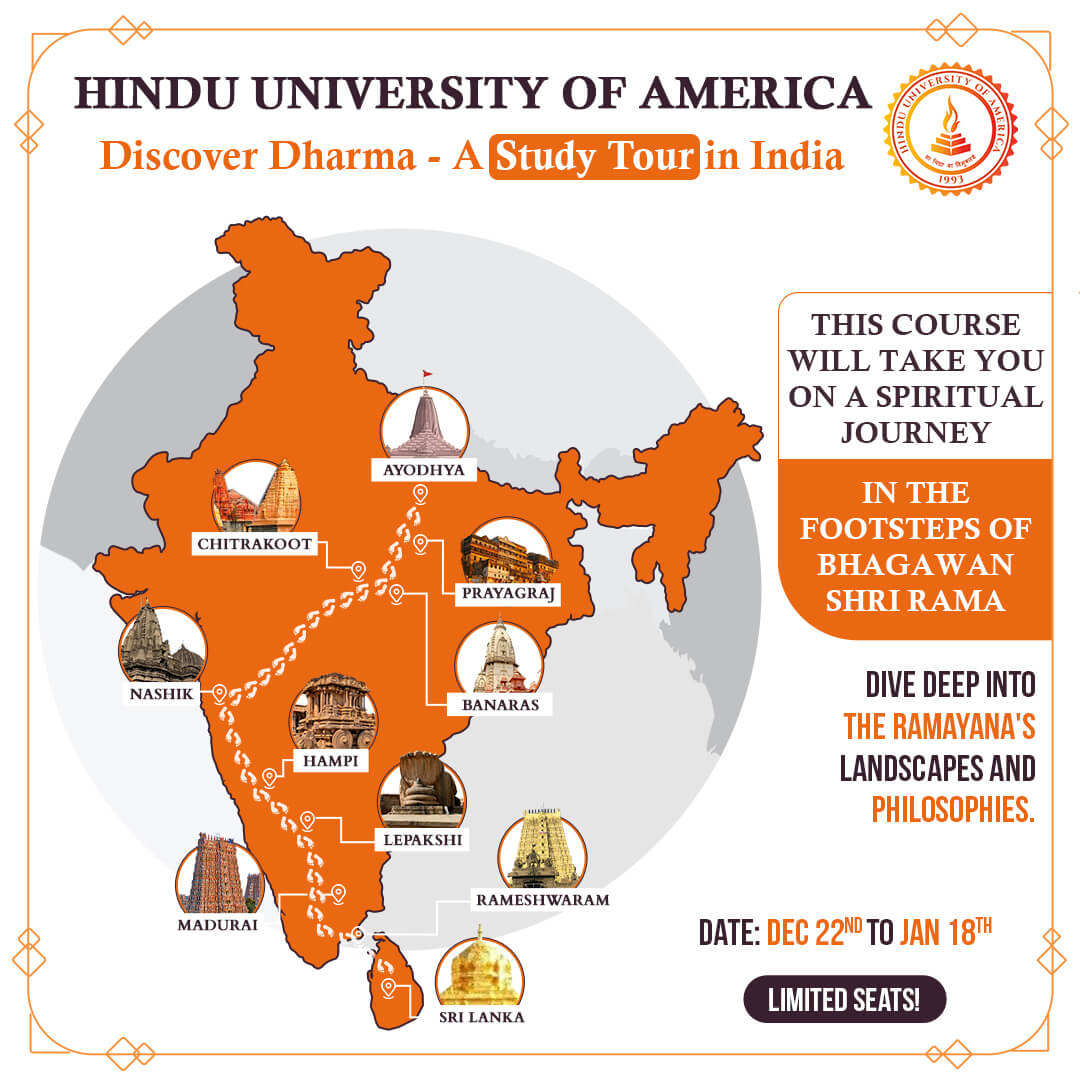
Discover Dharma - A Study Tour in India
In the Footstep of Bhagawan Rama
Dates: Dec 22nd 2023 to Jan 18th 2024 | Price: $4000 - $6000 per student
Tour Preview
Express your Interest and we will be in touch with you.
Register your interest today. Limited Seats Available.
A HUA Faculty will accompany the Course Participants during the Tour.
The Course will cover the following:
- The Story of Ramayana
- The Story of the Ram Mandir in Ayodhya
- Local Legends at each Stop on the Tour
Tour Itinerary
- Tour at a Glance
- Week 1
- Week 2
- Week 3
- Week 4
• Arrival, Check-in, Rest

Guided tour of Delhi.

• Afternoon would be kept free for Discussions at the hotel.
• Around 3 pm, proceed to visit Swaminarayan Akshardham.
Swaminarayan Akshardham in New Delhi is a magnificent temple that
showcases 10,000 years of Indian culture. It represents the essence of ancient architecture, traditions, and spiritual messages. The Akshardham experience
is an enlightening journey through India’s art, values, and contributions for progress, happiness, and harmony. The grand complex was built in just five years and is a divine abode of the supreme God.
Post the tour, we’ll return to the hotel.

• This entire day is kept free for discussion with scholars at the hotel.
Delhi / Lucknow (By Shatabdi Express – 6:10 am / 12:50 pm) – Lucknow / Ayodhya (By Surface – 135 kms / approx 3 hrs drive)
Ayodhya (Ayodhyā), the birthplace of Bhagavān Śrī Rāma, is a legendary city and the setting of the epic Rāmāyaṇa. It is considered the one of the seven most important pilgrimage sites for Hindus.

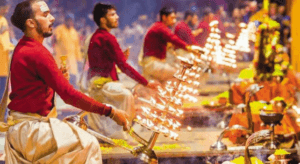
Gaṅgā Ārti Ceremony: Witnessed the enchanting view from a boat ride on the Sarayu River. Devotees light oil lamps and offer prayers to the river.
Hanuman Garhi: A 10th-century temple dedicated to the Hindu God, Hanumān. It is one of the most important temples in Ayodhyā and believed to be the site where Śrī Hanumān guarded Ayodhyā.
• Ram Janma Bhoomi temple: The birthplace of Bhagavān Śrī Rāma. This holy site is one of the seven most important pilgrimage sites in India.
• Sita ki Rasoi: A temple that was once the royal kitchen of Goddess Sītā during the Rāmāyaṇa era.
• Dashrath Bhavan: The original residence of King Dashrath.
• Kanak Bhawan: A temple dedicated to Bhagavān Śrī Rāma and Goddess Sītā, gifted to them by Śrī Rāma’s stepmother, Kaikayi.
• Ram Katha Park: Witness a live storytelling session here about the epic Rāmāyaṇa.
• Sarayu River Banks: Enjoy a leisurely stroll to explore local food.
Chitrakoot (Citrakūṭ) – In the epic Rāmāyaṇa, this is where Rāma-Bharata Milāp took place.
• Early morning drive to Chitrakoot.
• Ramghat (Rām-ghāṭ): The serene ghat on the Mandākini River and the center of religious activities in Chitrakoot. It is believed that Rāma, Sītā, and Lakṣmaṇa appeared to the poet Goswami Tulsidas,
the composer of the Rāmacharitamānas.
• Ārti in the evening on the banks of Mandakini river.
• Gupt Godavari Caves: Believed to be the site of Bhagavān Śrī Rāma
and Lakṣmaṇa’s secret meetings, as evidenced by the throne-like structures inside.
• Kamadgiri: a forested hill and the heart of Chitrakoot, named after Kamadnathji (Bhagavān Rāma), the fulfiller of all wishes.
• See the Bharat Milap Temple on the 5-kilometer Parikrama path.
•Valmiki Ashram: According to popular belief, Śrī Rām, Sītā, and Laxman visited this ashram on their way to Chitrakoot.
• Jānaki Kund: Believed to be the bathing spot of goddess Sītā during her exile, this tank is situated along the banks of the Mandakini river. You can see marks of footprints believed to be hers.
• Hanumān Dhāra – A spring that sprouted when Śrī Rāma shot an arrow into
the rock when Śrī Hanumān came to extinguish the fire caught in his tail after
returning from burning Laṅkā.
• Sphatik Shila – Meaning crystal rock, believed to bear the footprints of Prabhu
Śrī Rāma and Goddess Sītā.
- Drive to Prayagraj (130 km / approx 4 hrs)
- Ārti ceremony at the Triveṇi Sangam Ghat – An enchanting experience in with floating diyas amidst the sound of bells and chanting.

- Prayagraj (Prayāg-rāj): Is an important pilgrimage center for Hindus. Here, the holy Gaṅgā, Yamuna, and Saraswati rivers meet, creating a pious Triveṇi Sangam.
- Tirthas are places of salvation for the bhaktas and Prayāgrāj, also known as Tirtharaj (King of Tirthas) is where Maha Kumbh Mela—greatest and holiest of all gatherings—is held once every twelve years.
- Kumbh Mela: According to legends, Vishnu was carrying a Kumbh (pot) of Amrit (nectar), when a scuffle broke out and four drops were spilled, They fell to earth at the four Tirthas of Prayag, Haridwar, Nasik and Ujjain. To commemorate this event, Kumbh Melas, a holy gathering of bhaktas, are held every three years at these four places.
- Apart from Kumbh Mela, the place is sacred as it is believed that Rām, Sītā,
and Lakṣmaṇa crossed the sacred river Gaṅgā and stayed in Sage Bharadwaj’s Ashram in Prayāgrāj before heading to neighboring Chitrakoot.
- Triveṇi Sangam – Early morning boat ride to explore the ghats. Take a holy dip if desired.

- A visit to Hanumān Mandir.
- Drive to Varanasi
- Varanasi (Vārāṇāsī) or Kashi (Kāśī), one of the oldest living cities in the world, with a continuous history dating back 5,000 years. It retains the allure of the ancient world and boasts an unrivaled diversity and unique sense that can be experienced nowhere else.
- Kashi Vishwanath Temple: A sacred shrine dedicated to Bhagavān Shiva, the patron deity of Varanasi. Originally built by Rāni Ahilya Bāi Holkar in 1776, it was later destroyed and rebuilt in the 18th century, with golden plating on the shikharas gifted by Maharaja Ranjit Singh.

- Visit Kashi Vishwanath Temple in the afternoon.
- Evening Boat ride to witness the captivating Gaṅgā Ārti ceremony.
- New Year Gala Dinner at the hotel.
- Early morning boat ride to start off your New Year.
- Durga Temple: An 18th-century Nagara style temple. Also known locally as the “Monkey Temple” due to the playful monkeys in the area.

- Tulsi Manas Mandir: Believed to be the site where Goswami Tulasidas wrote the epic Ramcharitmanas.
- Bharat Mata Mandir: Houses a remarkable relief map of India carved from marble.
- Banaras Hindu University: The largest residential university in Asia covering around 2,000 acres and gifted by the former Maharaja of Varanasi.
- Sarnath – An 8-kilometer excursion in the afternoon. Lord Buddha gave his first Sermon after attaining enlightenment at Sarnath. Ashokan Stupas, Mulagandha Kuti Vihara and the Sarnath museum are the highlights.
Varanasi / Mumbai (By Flight – AI 696 – 1:30 pm / 3:50 pm) – Mumbai / Nashik (By Surface – 166 kms / approx 4 ½ hrs drive)
Nashik, a historic city located approximately 166 kilometers away and situated at an elevation of 2,300 feet above sea level.
Pañchavati, or modern day Nashik is the sacred site where Sītā was abducted by demon king Rāvaṇa in the epic Rāmāyaṇa as the and where Rāvaṇa’s sister Shūrpankha proposed marriage to Rām before having her nose severed by Lakṣmaṇa. The city thus got its name from ‘Nashik or Nāśika’, meaning ‘nose’.
- Pañchavati, a serene town near Nasik. The site holds great religious significance in the epic of Rāmāyaṇa, even today.
- Kalaram Temple (Kāla Rām Temple) is named after the black statue of Bhagavān Rāma and has a beautiful legend associated with it.

- Sītā Gūfā (Seeta’s caves) nearby is believed to be the spot where Sītā was kidnapped by Rāvaṇa. The caves house idols of Śrī Rām, Sītā, Lakṣmaṇa, and a Shivling, worshiped by Mā Sītā.
- Rām Kund is the sacred tank in Nashik associated with Bhagavān Rāma.
- Hindus believe a dip here washes away sins, attracting large crowds.
- Trimbakeshwar Temple, an ancient Hindu Pilgrim center located at the source of the Godavari, the longest river in peninsular India. Trimbakeshwar is the home to one of the twelve Jyotirlingas, with the unique feature of a threefaced Linga embodying Tridev – Bhagavān Brahma, Bhagavān Vishnu, and Bhagavān Shiva.
Nashik / Mumbai (By Surface – 166 kms / approx 4 ½ hrs drive) –Mumbai / Bangalore (By Flight – AI 607 -4:40 pm / 6:30 pm)

- Drive 130 km / approx. 3 hrs to Lepakshi.

- In the epic Rāmāyaṇa, Jatayu tried to rescue Sītā from Rāvaṇa but was attacked and fell on this spot. After relaying what happened to Śrī Rāma, he was told “Le Pakshi” meaning “Get up Bird” by Śrī Rāma, and Jatayu then flew to heaven. Thus, the town got its name Le-pākśi.
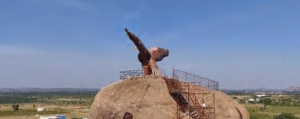
- Visit Jatayu Theme Park to see the impressive Jatayu bird statue, designed to appear ready for flight from the top of the rock.

- Veerabhadra Temple / Lepakshi Temple (Anantapur): A temple renowned for its astounding architecture and art, including hanging pillars, cave chambers, famous frescoes, and murals. It is also known for a footprint believed to be of Māta Sītā. Besides being an archaeological attraction, the temple is an important pilgrimage destination according to Skanda Purana.
- Hampi: Renowned for its magnificent temples and monuments, was built during the Vijayanagara empire era and is designated as a UNESCO World Heritage Site.
- Mātaṅga Parvat: Is the place where Śrī Rāma and Śrī Lakṣmaṇa, while on their way to Laṅkā, met an elderly woman ascetic called Shabari at her Guru Matanga Ashram, and she fed them ber (Indian jujubes).
- Prasanna Virupaksha Temple: This small shrine from the glory days of Vijayanagara Empire, dedicated to Śrī Virupaksha, one of the forms of Śrī Shiva, is located on the banks of the Tungabhadra river and is designated as a UNESCO World Heritage site. It boasts of beautiful architecture and stone inscriptions dating back to the 7th century.


- Vithalā Temple: Is a 16th century temple in Hampi. It flaunts intricate carvings on its impressive arch at the entrance.
- Stone Chariot: This famous iconic structure and other smaller temples in the courtyard showcase exquisite craftsmanship.
- King’s Balance: is a 15th-century granite structure with intricately carved pillars supporting a stone beam. It was used to weigh the king with royal jewels for annual donations to temple priests.
- Anjaneya Hill: Located 2 kilometers from Virupaksha Temple. Climbing 570 steps to reach the top stunning views and pleasant air.
- Yantrodhāraka Hanumān Temple: Is a beautiful 500-year-old temple inside a cave on the hill. Legend claims that Bhagavān Rāma met Hanumān on Malyavana hill.
- Zenana Enclosure in Hampi was exclusively designed for the royal women of the Vijayanagara Empire.
- Lotus Mahal, the Basement of the Queen’s Palace, a water pavilion, and three guard towers that have withstood the test of time and Mughal raids are in the enclosure.
- Hazāra Rāma Temple: Is a 15th-century World Heritage monument in Karnataka, showcasing intricate carvings of Gods and Goddesses, representing India’s cultural and religious significance.
Anegundi: Believed to be the mythical kingdom Kishkindha ruled by Vānara Rāj Sugrīva.
The star attractions of Anegundi, are:
- Anegundi Fort: Ancient fort with many gates houses the Durga and Ganesha temples where Vijayanagara Kings prayed before going to war.
- The Anjanadri Hill, believed to be the birthplace of the monkey god Hanumān; and can be easily spotted from Anegundi, thanks to the temple at the hilltop and a white trail of steps zigzagging all the way to the top.
- Gagan Mahal: 16th-century Indo-Islamic style building constructed for women from the royal family to witness festivities in Hampi.
- Onake Kindi Cave Paintings.
- Anegundi and its surroundings boast of other temples, fortifications, and attractions like the Huchappayana Matha Temple, Pampa Sarovar, Chintamani Temple, and Ranganatha Temple.


This day will be dedicated to a leisurely drive to Bangalore, allowing for a
much-needed opportunity to unwind and recharge.
- Embark on a scenic 350-kilometer journey by road to Bangalore lasting 6 ½ to 7 hours.
- Enjoy the rest of the evening indulging in leisure and relaxation.
- Gandhi Memorial Museum, Madurai: One of India’s five Gandhi
Sangrahalayas, housing important manuscripts, paintings, sculptures, and rare photographs.This os where Gandhi adopted simple clothes.- Meenakshi Amman Temple: Built on the bank of the Vaigai river between 1623 and 1655, this renowned temple dedicated to Parvati and Shiva showcases magnificent Dravidian architecture with its famous towering gopurams, four of which reach over 160 feet each.
Drive to Rāmeśwaram – 175 kms / approx 3 ½ hrs
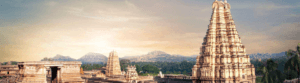
- Rameswaram or Rāmeśvaram, Is the second closest point in India to Sri Lanka. It was once connected to the island through the Rāma Setu.

- Rameswaram Temple: Dedicated to Bhagavān Shiva, it is one of India’s 12 Jyotirlinga temples. It is renowned for its stunning architecture, including the world’s longest corridor and intricate carvings on pillars. The temple houses two lingams – Rāmalingam and Shivalingam, is significant equally for both Rāma and Shiva.
- Gandhamadhana Parvatham, the highest point of this island town, is revered by several communities in southern India. From this hilltop, 3 kms from the Rāmanāthaswāmy Temple, the entire island of Rāmeśwaram can be viewed.

- According to legend, Śrī Rāma met Vibhīṣaṇa, the brother of the demon king Rāvaṇa, on this hill. Devotees believe that Śrī Rāma’s footprints exist here, and a Maṇḍapam has been built around the spot.
- Pamban Bridge, the longest in southern India, connects Rameswaram Island to the mainland. Located 7 km from Rāmeśwaram, is named after Pamban, the sacred place where Śrī Rāma quenched Devī Sītā’s thirst.

- Pańca-Mukha Hanumān Temple: Hanuman is said to have shown his five faces and donned sindūram here. The idols are believed to house the actual soul of the Gods, creating a mystical atmosphere.

- The floating stone outside the temple, believed to have been used to build the bridge in the epic Rāmāyaṇa, are not to be missed.
- Jaḍa Tīrtham: A small temple within Kaveri Tirtham, known for its pauraṇika significance, unique construction, exquisite lattice work and remarkable artistry.
- Dhanuskodi: Located 20 km away from Rāmeśwaram, is this unique attraction at the south eastern tip of Pamban Island.

- The name ‘Dhanuṣ-kodi’ means ‘end of bow’, symbolizing the legend of Bhagavān Śrī Rāma and the epic Rāmāyaṇa. This is where Śrī Rāma, Śrī Lakṣmaṇa, Śrī Hanumān, and the vānara army built the bridge known as Rām Setu to rescue Goddess Sītā from demon Rāvaṇa’s captivity.
SRI LANKA – A TROPICAL PARADISE AWAITS YOU!
Nestled in the Indian Ocean, Sri Lanka, captivates travelers with its diverse landscapes, rich history, and warm hospitality. With lush rainforests, pristine beaches, misty mountains, and serene lakes, this enchanting island offers a remarkable. destination for spiritual seekers.

Traveling ‘In the Footsteps of Bhagavān Śrī Rāma and Sītā’, re-discover the the settings for many pivotal events in the ancient Hindu epic Rāmāyaṇa, and take a pilgrimage like no other.
Explore the sacred sites of Sri Lanka, immerse in its mystical and sacred tales, explore its history that dating back thousands of years, to deepen your understanding of the Rāmāyaṇa and find moments of inner peace and reflection

- Arrive at Bandaranayake International Airport..
- By Road to Anuradhapura.
- Anuradhapura: one of the world’s oldest cities, offers a captivating journey through time with its towering dagobas, intricate ruins, and the Sri Maha Bodhi, the world’s oldest documented tree. Surrounded by serene lakes and lush greenery, it provides a tranquil backdrop for exploration and spiritual retreats.
Ram Setu: Is a natural bridge-like formation believed to be the floating bridge built by Śrī Rāma and his army of Vānaras to rescue Devī Sītā from the demon king Rāvaṇa. Stretching for approximately 48 kilometers (30 miles), this chain of floating limestone shoals, sandbanks, and coral reefs has fascinated researchers and visitors for centuries. During low tide, the submerged bridge becomes visible, attracting pilgrims and tourists alike.

- Travel to Talaimannar Pier by road.
- Board a luxury yacht that will take you to see the Ram Setu. You have the opportunity to perform a pooja on board the yacht if you so wish.
- Breakfast, lunch, fruit juices, tea and coffee will be served on the yacht. You may also enjoy paddle boarding and even take a dip in the Indian Ocean.
- Thirukketheeswaram Temple: Is the oldest Shiva temple of Sri Lanka and is believed to house the Shiva lingam to be erected by Śrī Rāma. It is one of the ancient Pañcha Īśwarams and boasts more than 1400 years of recorded history and many legends.

- Sita Kotuwa: Located in Hasalaka, Sri Lanka, is a historically significant site where Devī Sītā was held captive by demon king Rāvaṇa. Nestled in lush greenery, the ruins and biodiversity make it a fascinating destination for history and nature enthusiasts.
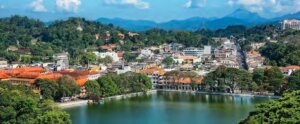
- Kandy is known for its rich traditions, stunning landscapes, vibrant festivals, and attractions like the revered Temple of the Tooth relic, Kandy Lake, Royal Botanical Gardens, and Peradeniya University.

- Kandyan Dance Performances, showcasing the island’s folklore through graceful movements and rhythmic drumming and not to be missed.
- Sri Bhakthi Hanuman Temple in Ramboda also known as Chinmaya Hanuman Temple is a significant spiritual site dedicated to Bhagavān Hanumān from the Hindu epic Rāmāyaṇa.
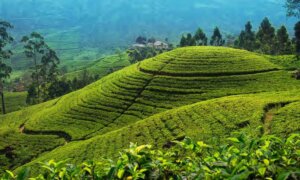
- Stop at Labookellie Tea Factory for a cup of tea, and if time permits, a factory tour.
- Nuwara Eliya: A charming hill station in Sri Lanka often called “Little England,” is known for its cool climate, stunning landscape, and colonial-era charm amidst rolling hills and lush tea plantations.

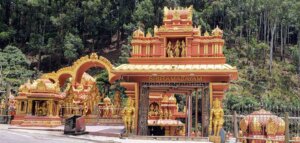
- Sita Amman Temple in Nuwara Eliya, Sri Lanka, is the only Hindu temple dedicated to Goddess Sītā.
- Sita Eliya: Is believed to be the Ashoka Vātika from the Rāmāyaṇa, showcases footprints believed to belong to Bhagavān Hanumān.
Divurumpola: Meaning “Oath Place” in Sinhala, is believed to be where Devī Sītā underwent the Agni Pariksha.Ravana Falls, a stunning multitiered waterfall in Ella.- Ravana Cave is a historical cave steeped in folklore, believed to be the place the demon King Rāvaṇa hid Māta Sītā.
- Gayatri Peedum Temple in Nuwara Eliya, Sri Lanka, is a revered Hindu temple dedicated to Goddess Gāyatri. It is significant, as Śrī Rāma sought guidance from Sage Agastya and received the powerful Gāyatri Mantra here. The temple is also associated with the appearance of the Tri Mūrtis – Śiva, Brahma, and Viṣṇu.
- Travel to Chilaw

- Munneswaram temple: Is one of the five ancient Pañcha Īśwarams, is a significant pilgrimage site where Śrī Rāma sought guidance from Lord Shiva.
- After the visit to the Munneswaram Temple, we proceed to Bandaranaike International Airport for a return flight.
- Upon arrival at Delhi, the participants have the choice to stay in India and visit Ayodhya scheduled on Jan 22, 2024 Monday to witness Inauguration of the New Rama Janma Bhoomi Temple.