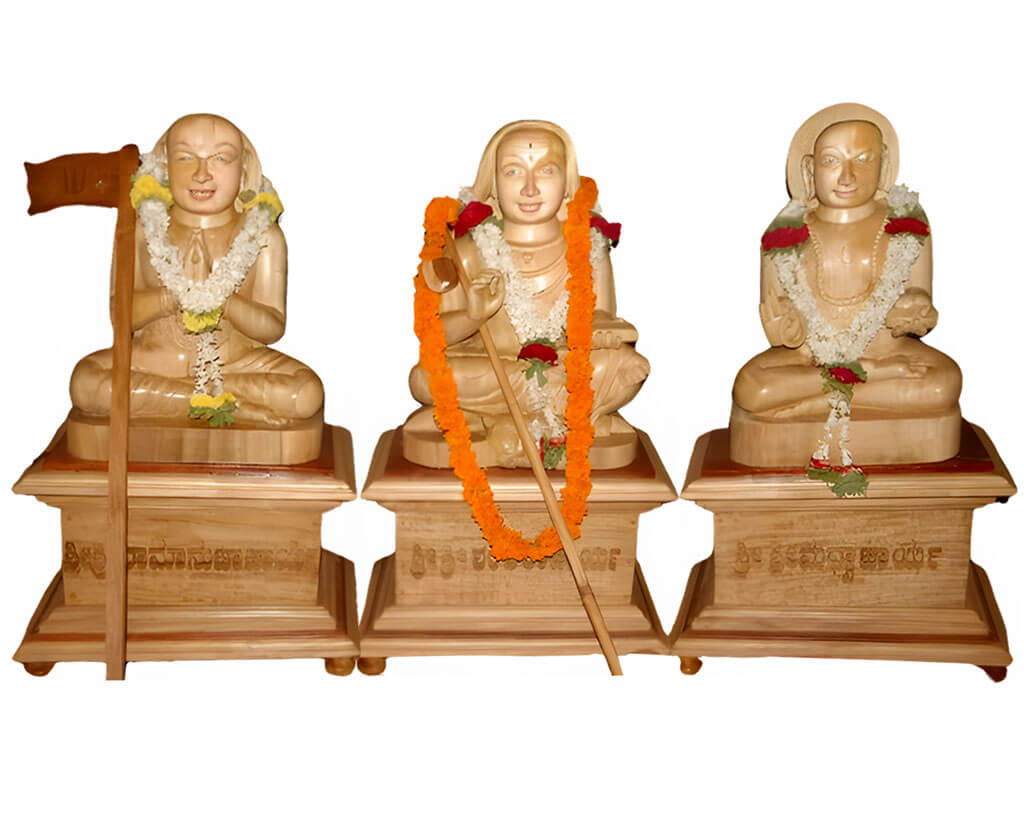







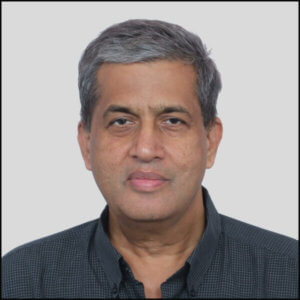
Shri. Krishna Kashyap is an engineer and businessman by profession. He holds a Master’s Degree in Engineering from University of Iowa, USA. Currently he is retired and lives in India after working in the USA for about 39 years in various areas of technology and business for several companies. Krishna Kashyap has devoted significant time on the study of Vedanta, Sanskrit and Yoga studies and practice for several decades, from many traditional teachers, with a deep interest in recognizing the similarities and differences across the three great flavors of Vedanta i.e., Advaita, Dvaita and Visistadvaita.
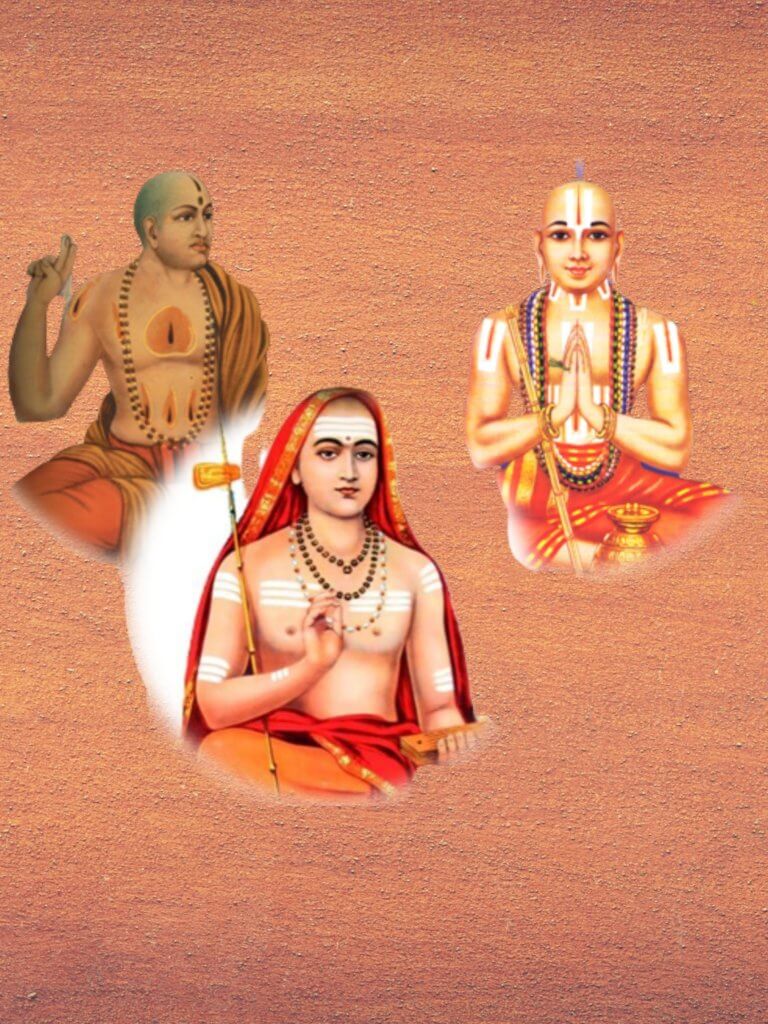
Shri. Krishna Kashyap has studied the Sanskrit Vyakarana, Kavya and Tarka under MahaMahopadhyaya Sri N.T Srinivasa Iyengar, Vidwan Ananthakrishna shastri, HH Rangapriya Swamiji, Vidwan C Anantacharya and MahaMahopadhyaya Korada Subrahmanyam. He has delved deeply into the Upanishads, Brahma Sutras, and Bhagavad Gita Commentaries of the three great Acharyas, Sri Shankaracharya, Sri Ramanuchacharya, and Sri Madhvacharya under Vidwan Sri Sampath Iyengar, Vidwan S.M.Srinivasa Chari (who has written several books on Vedanta), MahaMahOpAdhyAya N.S Anantha Rangachar, author of over 100 books on philosophy (President of India Award winner), HH Rangapriya Swamiji, Sri MahAmahOpAdhyaya K.S Varadachar (President of India Award winner) and Prof. M.A Alwar.
He has also taught the Bhagavad Gita Commentaries by the Sri Shankaracharya(S), Sri Ramanujacharya (R), and Sri Madhvacharya (M) several times. He has uploaded several YouTube lectures on comparative understanding of these three Bhashyas (mata-traya-bhashya) on the Gita recently. He, along with other students of Sri K.S Varadachar wrote a paper in English, titled “Satyanveshana (Inquiry into truth)”. Satyaveshana was written by Sri K.S Varadachar, in Sanskrit as an introduction to “sarvankaSA”, his own commentary on “tatva muktA kalApa” of Sri Vedanta Desika. This paper explains the true nature of Vedanta philosophy highlighting the close relationship between the three main systems of Vedanta namely Advaita, Visistadvaita, and Dvaita by exposing major misconceptions regarding them.