






Hindu University of America Logo

Hindu University of America

Menu

BECOME A FRIEND
Give to HUA
Login to LMS
Hindu University of America Logo

Hindu University of America

Menu

FAQ

BECOME A FRIEND
Give to HUA
Login to LMS
BECOME A FRIEND
Give to HUA
Login to LMS

Menu

  • About HUA
    • President’s Message
    • About HUA
      • Goals & Objectives
      • Learning Outcomes
      • Mission & Vision
      • Values
      • Ethos And Culture
      • Our Promise
      • Documents
    • Team
      • ALL Teams
      • Boards
      • Administration
      • Faculty
    • Partners
    • Heritage
  • Academics
    • Academics
    • Divisions
    • Programs
    • Areas of Study
    • Courses
    • Faculty
    • Credit Hours
    • Academic Calendar
  • Ayurveda College
  • Admissions
    • Admissions
    • Contact
    • Apply
    • Conversion Formula
    • Credit Transfer
    • Tuition and Fees
    • Scholarships
  • Advancement
    • Advancement
    • Giving to HUA
      • Giving Categories
      • Sustenance Funds
      • Capital Funds
      • Endowment Funds
      • Legacy Gift Guidelines
    • Donor Recognition
  • Activities
    • Videos
    • Webinars
    • Events
    • Photos
  • Blog
  • Login
    • Calendar
    • Drive
    • Chat
    • Meet
Annual Giving Campaign - 2026-2027 is under way. Donate today by Clicking Here, and help us reach our goal.
So far $93,476 has been raised out of a target of $ 3.5 Million. Click Here to donate today and help us reach our goal.
Latest Blog Restoring the True History and Chronology of Ancient India
Close button icon for closing popups
Hindu University of America Logo

Hindu University of America

  • About HUA
          • About HUA
          • President’s Message
          • Goals & Objectives
          • Learning Outcomes
          • Mission & Vision
          • Values
          • Ethos And Culture
          • Our Promise
          • Team
            • ALL Teams
            • Boards
            • Administration
            • Faculty
          • Partners
          • Heritage
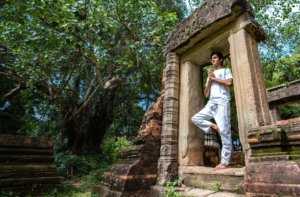
        • Man in white doing yoga pose at ancient stone temple ruins
        • Learn more about HUA

        • Legacy Gift
        • Donate Today

  • Academics
          • Academics
          • Divisions
          • Programs
          • Areas of Study
          • Courses
          • Faculty
          • Credit Hours
          • Academic Calendar
        • Indian students using laptop with Academics page on screen
        • Explore programs and courses

        • A group of 5 young adults sitting with laptops & phones in campus setting
        • Browse our course catalog

  • Ayurveda
  • Admissions
          • Admissions
          • Contact
          • Apply
          • Conversion Formula
          • Credit Transfer
          • Tuition and Fees
          • Scholarships
        • Students
        • Learn more about our admissions process

        • Legacy Gift
        • Apply Now

  • Advancement
          • Advancement
          • Giving to HUA
            • Giving Categories
            • Sustenance Funds
            • Capital Funds
            • Endowment Funds
          • Donor Recognition
        • View of planet Earth from space showing Indian subcontinent
        • Learn about giving to HUA

        • Night view of Ganga river with illuminated ghats and buildings
        • Give to HUA

  • Activities
          • Videos
          • Webinars
          • Events
          • Photos
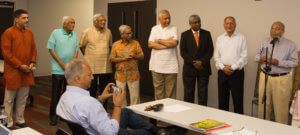
        • A group of men standing in a room during HUA gathering or event
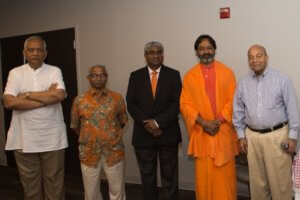
        • Five men standing together at HUA event, including a swami in orange robes
  • Blog
  • Login
          • Calendar
          • Drive
          • Chat
          • Meet
        • A group of 5 young adults sitting with laptops & phones in campus setting
        • Access HUA Email

        • Indian students using laptop with Academics page on screen
        • Access HUA LMS

Sanatana Dharma

Niṣkāmakarma

  • Tara Bridgelal Maharaj

|

  • February 25, 2025

What is Niskāmakarma?

What is Niskāmakarma?

The universal law of karma states that there is a reaction for every action. Although a perfect system of justice, this law can potentially keep us within samsāra when action is performed as kāmakarma or as driven by pleasure. We must inevitably reap the fruits of our pāpa and puṇya throughout our lifetimes.

Niṣkāmakarma provides a path out of transmigration. It literally means action without desire (niṣ – without, kāma – desire, karma – action). But desire for what? Is it wrong to have any desire at all? Even noble ones? The desire for the fruits of our pleasure-driven actions must be avoided. 

The Upaniṣads state that this type of selfless action or Niṣkāmakarma is essential on the path to spiritual progress, and an eventual Mokṣa – the highest Puruṣārtha (goal of humankind) and the ultimate objective of existence. 

Is this mindset practical to everyday life? In today’s world, the anticipated outcomes drive our every action. Financial, time, and effort investments are not made without expecting a return. Projects and life decisions are carefully planned and executed with the anticipation of a specific outcome. What, therefore, is the value of action without desire, and is it practical or even possible in a world where instant gratification has become the norm? 

First, let us understand why we perform actions with attachment. Chārvākha philosophy states that the boundaries of sense perception draw the limitations of reality. Therefore, that we are the body made from matter and that nothing exists beyond the perceivable makes it acceptable for one’s actions to be motivated solely by an anticipated pleasurable outcome. However, Vedānta clarifies that we are jīva (embodied ātma/soul) within the jagat. The physical body is but one kośa (sheath) of the śarīra (physical body), whose function is to act as the vehicle of karmas (actions) that work towards freeing the ātma from saṃsāra. Without fully understanding this, we tend to identify with and according to the śarīra  

Even as followers of Vedānta in theory, our practice and behaviors often align more with the Chārvākha philosophy. Identifying as physical “bodies,” the senses trap the mind and enslave the intellect, directing most of our karmas in the relentless pursuit of never-ending material desires.

We ceaselessly seek to satisfy the perceptions of pleasure that are slow in coming and quick to end, keeping us caught in constant pursuit. Intoxicated by the pull of the sense organs to the sense objects, the mind is tossed in multiple competing directions. Yet, despite the staggering time and efforts invested in sense fulfillment, there is never satiation of what has become an invariably bottomless pit of desire.

The Upaniṣads clarify that this association with the body comes from avidya or ignorance of the nature of the true Self. Emphasis on knowledge of the phenomenal (apara vidya), which, while necessary for survival and growth within the jagat, is incomplete and insufficient for reaching our full potential. 

Vedānta teaches that desires arise only when there is an experience of lack or incompleteness. The perception that we are incomplete creates the need for something external or extra. As the body is limited, so does association with the body lead us to feel that we, too, are limited. And because of this, we are driven towards endless activity to fill the perceived lack, and we become attached to the karmaphalas or fruits of our actions.

What is the danger of kāmakarma?

The severity of performing karma with selfish desire is two-fold.

1. Firstly, the mind becomes confused and saturated with constant decision points as the senses compete for enjoyment. As soon as one desire appears to be fulfilled, another emerges, creating a perpetual web of vain attempts  to keep each sense organ satisfied. This combination drives karma towards preyas (short-term temporary gains) over śreyas (permanent freedom and bliss). Accordingly, the intellect develops frustration and is fatigued by the insatiable chase, unable to function effectively within the world. There is no peace, no contentment, and only short-lived pleasure.

While this makes for a very frustrating and potentially unhappy life, the even greater danger lies in the longer-term risk.

2. Desire-driven karma imprisons us within the barriers of samsāra indefinitely. Continuous repetition of actions results in the formulation of samskāras (psychological imprints) which, with further repetition, strengthen into vāsanas or habits. Reinforced vāsanas develop into vṛttis or tendencies, which become our habituated default mindsets that direct our karmas in the unrelenting quest of desire after desire.

Illustration 1 – The Karmic Cycle

At death, these samskāras follow the ātma into a new body, guiding its continued journey through the birth-cycle in jagat, shaped by its karma, knowledge, and desires, in accordance with the laws of transmigration.

The Kathopaniṣad 2.2.7 states:

“योनिमन्ये प्रपद्यन्ते शरीरत्वाय देहिनः । स्थाणुमन्येऽनुसंयन्ति यथाकर्म यथाश्रुतम् ॥ 

Some jīvas enter the womb to be embodied as organic beings, and some go into non-organic matter according to their work and according to their knowledge.”

But how does niṣkāmakarma help us to avert these dangers and free us from samsāra?

To read the Part 2 of this blog, click here.


Leave a Reply Cancel reply

Your email address will not be published. Required fields are marked *

Popular blogs

Ayurveda

|

  • October 16, 2026

Stress, Sleep, Immunity and Ojas Research Study – III

Ayurveda

|

  • October 9, 2026

Stress, Sleep, Immunity and Ojas Research Study – II

News

|

  • October 6, 2026

A Life Dedicated to the Intellectual Recovery of Sanatana Dharma

Ayurveda

|

  • September 28, 2026

Stress, Sleep, Immunity and Ojas Research Study – I

Authors

  • Dimple Kaul(1)
  • Dr. Sailesh Rao(1)
  • Rama Koneru(4)
  • Pandita Dr Indrani Rampersad(1)
  • Ramsundar Lakshminarayanan(1)
SEE ALL BLOG POST

categories

  • Ayurveda16
  • Events5
  • Hindu dharma6
  • Hindu Studies39
  • Hinduism14
  • History17
  • News37
  • Performing Arts2
  • Sanatana Dharma7
  • Sanskrit & Language4
  • Text & Traditions11
  • Uncategorized1
  • Yoga11

SHARE ON

Hindu University of America | HUA

Be Part of The HUA Community

Sign-up for HUA communications

Hindu University of America

Main Campus:

  • Pine Lake Retreat Center,
  • 21725 FL-33,
  • Groveland, FL 34736

Administrative Office:

  • 5200 Vineland Rd #125
    Orlando, FL 32811
  • 407 545 5057
  • 407-205-2118
  • info@hua.edu
  • Tax ID / EIN: 59-2977691
Links
  • About HUA
  • President’s Message
  • Goals & Objectives
  • Learning Outcomes
  • Mission & Vision
  • Values
  • Ethos And Culture
  • Our Promise
  • Team
    • ALL Teams
    • Boards
    • Administration
    • Faculty
  • Partners
  • Heritage
  • About HUA
  • President’s Message
  • Goals & Objectives
  • Learning Outcomes
  • Mission & Vision
  • Values
  • Ethos And Culture
  • Our Promise
  • Team
    • ALL Teams
    • Boards
    • Administration
    • Faculty
  • Partners
  • Heritage
Social
  • Facebook
  • Twitter
  • Instagram
  • Youtube
  • LinkedIn

Be Part of The HUA Community

Sign-up for our free webinars


Cart
  • Your cart is empty! Return to shop
Checkout - $0.00
  • 0
  • 1

HUA Mitra

AI Mitra
Namaste! How can I assist you today?
Mitra! Ask me anything!
1
Please click on the link below to enroll into the Niṣkāmakarma Program or the appropriate phase.

On the program page, there are multiple payment plan options to choose from.