







Ayurveda Advanced

Applied Vedic Science Advanced Ayurveda

Course Content:

The wellbeing of the individual and society in the Vedic vision of the universe included both material and spiritual wellbeing. The Vedic vision did not exclude any group or peoples, unlike most ideologies which seek advantage for one group of people at the expense of others, but sought to provide such knowledge that could protect, enhance, empower and enrich life for all peoples who pursued these knowledge systems.

The theory and practice of Ayurveda are one of the vital applied sciences derived from the Vedic vision. Applied Vedic Science Advanced Ayurveda course is the first of a two-part course series that provides the familiarity of the knowledge system of Ayurveda, by exploring its background and key contributors to the different schools of Ayurveda.

This course provides an in-depth appreciation of the science and practice of Ayurveda, through a study of one of the core texts pertaining to the portions suggesting regimen for individuals corresponding to the different seasons. This primary text in Sanskrit will be discussed, along with some of the major commentaries on the source text.

In this course students will be able to:

  1. Understand the sensibility in the system of Ayurveda that customizes its prescriptions based on factors that impact the health and wellbeing of people.
  2. Assimilate the role and relevance of Ayurveda as a manual of holistic wellbeing.

Area of Study: Sanskrit Studies

Required / Elective: Elective

Prerequisites:

1) The medium of Instruction is Sanskrit

2) Only currently enrolled Sanskrit master’s certificate students can register for these courses. (MIT-SVS)

3) Admission into Master Program in Sanskrit through MIT-SVS

4) Completed previous MA Sanskrit Course

5) Completion of the Applied Vedic Science – Basic (Ayurveda)

Quarter Offered:  Winter Quarter
 

Certificate in Hindu Civilizational Studies

Certificate program in Hindu Civilizational Studies

Certificate program in Hindu Civilizational Studies (C.H.C.S) is an in-depth exploration of the Hindu Civilization from a Hindu perspective. It provides the student with a grounded understanding of Hindu Dharma as one of the oldest, continuous, and still thriving cultures of the world. It unfolds the paradigm of Dharma, i.e., sustainability or natural order, through an exploration of its culture and knowledge traditions. This program enables the student to discover, reconnect and become profoundly established in the paradigm of Sanatana Dharma through a systematic study of the Hindu Civilization.

It comprises of 2 parts:

1. Exploring Hinduism 

A set of courses to gain an understanding of Sanatana Dharma and Hindu thought – the bedrock of the Hindu Civilization, by exploring the history, facets, and practices of this culture, which is based on the principles of Dharma at its core. What is Sanatana Dharma? What is Hinduism? When did Hinduism start? Who is a Hindu? What makes Hindus different? Does Hindu thought have relevance in today’s world? Answers to such questions can be found in this “Exploring Hinduism” set of courses.

2. Hindu Contributions To The World 

A set of courses to learn how the Hindu civilization and its knowledge systems had influenced world progress with contributions in the realm of both Matter and Mind. This series of courses looks beyond the myths set in motion by a few hundred years of colonial encounter and examines the evidence for the sciences, technologies, inventions, industry, prosperity, wealth and thought leadership that had made India a sought-after civilization across times. It is now accepted knowledge that India was at the top in world trade for around 2000 years with 1/3rd of world trade coming from India. But there is very little mention of how India accomplished this position.

What did it create? What did it trade in? This set of courses goes into the details of the individual components that made up this 33% of world trade and its impact on the world and in India. This subject matter stays unacknowledged and is rarely available for discussion. It also addresses the crucial question, “How could this civilization give all this and more – both to the East and the West?”.

It is a cyclic program of 8 quarters / courses, where participants can join during any quarter and get their Certification once they complete the 8 courses in any order and at their own pace, depending on their ability to join any quarter. This program is open to all – those with or without Indian or Hindu roots, wherever they may be in the world. It will help see the world from a Hindu, Bharatiya, Indic perspective and experience how different it is, from what we think we know.

Program Learning Outcomes: At the end of this program, students will be able to:

  1. Explain the Hindu Paradigm of Dharma
  2. Describe salient aspects of the Hindu Civilization
  3. Critique various misrepresentations of Hinduism
  4. Synthesize an expansive account of world history
  5. Establish an expanded sense of purpose and relevance

Required / Elective: Required

Prerequisites: Admission into a Certificate in Hindu Civilizational Studies

Faculty / InstructorDr. D. K. HariDr. D. K. Hema Hari,

Quarter Offered: Winter 2026

DEHA – The principles of sound body in Bhagavad Gita

DEHA Principles of sound body in Bhagavad Gita

Course Content:

DEHA is the first of a three-course series titled, DEHA, GNANA and YOGA. The Deha course highlights the Material and Psychic aspects of the body. The Gnana course describes the Physical, Social, Occupational, Mental, Emotional and Spiritual dimensions of divine wisdom. The Yoga course explains the four paths of Yoga in Bhagavad Gita.

The DEHA Course helps students to understand, explore and apply the divine wisdom of the Bhagavad Gita in their own lives. It simplifies the learning process for the beginner using specially designed graphic workbooks, transliteration textbooks in multiple languages (12 Indian languages and 12 world languages) and guided audios, available in recitation and practice versions. The interactive sessions are conducted online in English. 

The Course is divided into 3 modules – Sadhana, Sodhana and Vaadana through which Students will acquire a thorough overview of Hindu Dharma and enrich the quality of their spiritual lives.

Sadhana: In this module students understand the verses in three steps.

Step 1: Shloka Rachana (Copy writing the shloka): In this step each verse is written in a language of choice by copying from the transliteration textbook. 

Step 2: Shloka Shravana (Listening to the verse): In this step the students will get to know the accurate pronunciation of each verse.

Step 3: Shloka Anucharana (Guided recitation): In this step students will learn the accurate pronunciation of each verse through guided practice. After this step the students would be able to independently practice the recitation using the guided chanting audios available online. 

Sodhana: In this module students understand the meaning of the shlokas in 2 steps.

Step 4: Bhava Darshana (Graphic illustration): In this step the meaning of the verse is explained through graphic illustration.

Step 5: Pratipada Artha (Word meaning): In this step the word by word meaning of the shlokas is translated from Sanskrit to English.

Vaadana: In this module the interpretations of different acharyas to the shlokas of each lesson are explored to gain deeper meaning and summarized by the students in about 500 words. A debate on contemporary issues and situations is held towards end of the course. During the debate the students shall apply their learnings from the course and present their remarks and recommendations by referring to the specific shlokas of DEHA course.

Course Learning Objectives:

In this course students will be able to:

  • Practice accurate pronunciation of the shlokas through guided chanting.
  • Discover the interpretations from different commentaries on Bhagavad-Gita.
  • Gain a deeper understanding of the Bhagavad Gita by comparing and analysing the similarities and differences between the interpretations of various acharyas.
  • Comprehend the simultaneous co-existence of diverse understandings of the divine wisdom of Hindu Dharma, enshrined in its varied Sampradayas.
  • Discover the foundations of Hindu Dharma from the Bhagavad-Gita.
  • Gain an overview of the Hindu Wisdom, and Hindu Pathways for spiritual growth.

Class Structure:

There will be a minimum of 1.5 contact hours with faculty every week. The class is structured in a way that promotes discussion and debate based on self-study and reflection each week. After the weekly class the students will be required to submit audio recordings of verses and complete online assignments with drag and drop type questions. 

Purchasable Readings before the Course: Bhagavad Gita with verse wise meaning and commentary by any author.

Required / Elective: Required

Prerequisites: N.A.

Faculty / InstructorMr. Gopi V. Prasad

Time: 11:00 am EST – 12:30 pm EST

Day: Every Sunday

Start Date: January 15, 2023

End Date: March 26, 2023

Quarter Offered: Winter 2023

Gita Vidya Teachers Training Certificate

Gita Vidya Teachers Training Certificate

​Gita Vidya Teachers Training Certificate is structured in the form of 4 quarter (1 year) sequence with 6 credit hours adding up to 60 hours of instruction and 120 hours of self-study in total. At the end of 4th quarter, students would qualify to become Gita Vidya Prabodhak. The program consists of 3 successive courses followed by project work in 4 th quarter. These courses focus on the principles of holistic wellness in Bhagavad-Gita.

Quarter 1. DEHA – The principles of sound body in Bhagavad-Gita

Quarter 2. GNANA – The principles of sound mind in Bhagavad-Gita

Quarter 3. YOGA – The principles of pure soul in Bhagavad-Gita

Quarter 4. BODHAK – Internship and Practicum in Teaching GitaVidya

Students are encouraged to register for all 4 quarters to get a 25% discount on the total course fees. 

Learning Objective(s): 

At the completion of the program of study, students will be able to 

1) Practice accurate pronunciation of the shlokas through guided chanting.

2) Discover the interpretations from different commentaries on Bhagavad-Gita.

3) Gain a deeper understanding of the Bhagavad Gita by comparing and analysing the similarities and differences between the interpretations of various acharyas.

4) Comprehend the simultaneous co-existence of diverse understandings of the divine wisdom of Hindu
Dharma, enshrined in its varied Sampradayas.

Discover the foundations of Hindu Dharma from the Bhagavad-Gita

Gain an overview of the Hindu Wisdom, and Hindu Pathways for spiritual growth.

Required / Elective: Required

Prerequisites: Admission into a Gita Vidya Teachers Certificate

Faculty / Instructor:  Mr. Gopi V. Prasad

Quarter Offered: Winter 2023

Day: Sundays

Time: 11:00 AM EST – 12:30 PM EST

Hinduism and Conflict Resolution

Hinduism and Conflict Resolution

Course Description

Though there is a vast literature on conflict and peace studies, the Hindu ideas are seldom factored in the discipline. The Hinduism and conflict resolution course aims to fill this gap while dispelling myths about Hindu ideas on conflict resolution. A closer examination reveals that Hindu thought from the very ancient era dealt with conflict at multiple levels and explored pathways for their transformation.

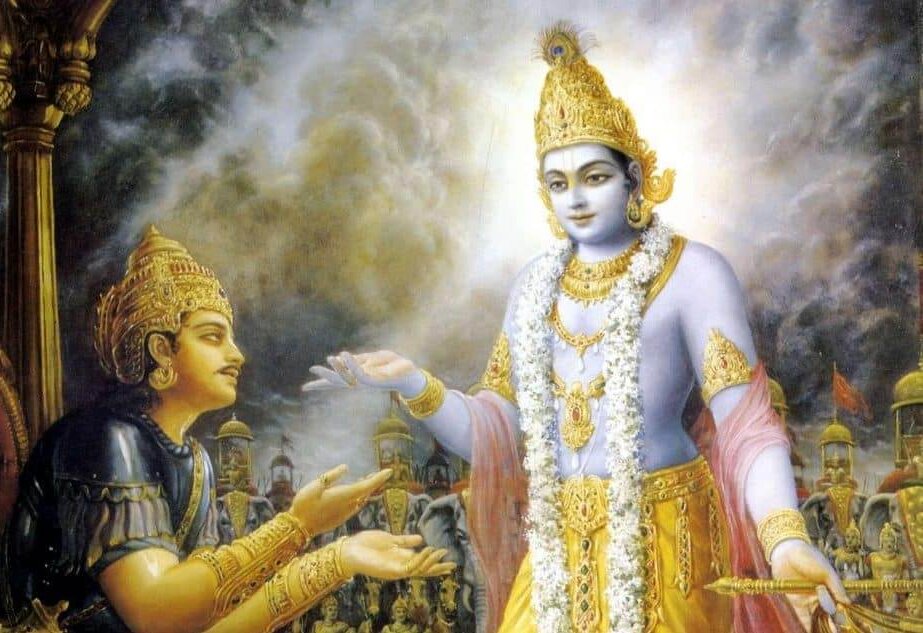
A hallmark of the Hindu thought is its spiritual approach to conflict and its emphasis on the interlinkage of conflicts at various spheres including psychological, social, cultural, political, and economic. Whether it was the dialogue between Krishna and Arjuna in the battlefield of Kurukshetra or Kautilya’s famous exhortation to Indians to unite against invading Greeks, or Ashoka’s remorse during the Kalinga war or Gandhi’s struggle against the British rule, they reveal to us powerful ideas and their relevance for a discourse on conflict resolution and peacebuilding.

While introducing students the core elements of the Hindu thought on conflict and peace, the course explores their conflict resolution potentials. Students will examine an ongoing conflict, while exploring Hinduism and conflict resolution.


Introduction to Dvaita, Advaita and Vishishtadvaita systems of Vedanta

Introduction to Dvaita Advaita and Vishishtadvaita systems of Vedanta

Course content:

This course students will be given introduction to Dvaita Advaita and Vishishtadvaita, the three major systems of Vedanta. Students get a clear idea about the metaphysics of the three systems. They will also be able to appreciate how to harmonize the three systems through reconciliation of perspectives that appear, superficially, to be irreconcilably different but in reality represent a continuum of thought.

Some of the contemporary academic and popular misunderstandings about Hinduism, in particular the three Systems of Vedanta, would also be discussed to clear out popular misunderstandings and misrepresentations. All these aim at helping the students to lead
a balanced life by successfully managing the challenges of modern life.

Course Learning Objectives:

As a result of taking this course, students will be able to:

1. Articulate a comprehensive understanding of the basic tenets of Hinduism as per the three Vedantic systems – Dvaita, Advaita and Vishishtadvaita and how they have evolved.

2. Demonstrate a basic knowledge of the differences and similarities in the three systems of Vedanta.

3. Communicate the coherence and continuity inherent in the three seemingly irreconcilable views of the Vedantic Systems – Dvaita, Advata and Vishishtadvaita.

4. Analyze Indological scholarship on the three Vedantic Systems examining contemporary views.

5. Illustrate the application of Vedantic knowledge to life situations by citing own experiences.

Class Structure:

There will be two sessions of one and half hours each per week. These classes are structured as per the Vedanta principles of listening (shravana), thinking using logic (manana) and meditating on how to realize them in real life (nididhyasana). There will be quiz sessions and a term paper which would help students to get more clarity on the theory aspects as well.

After every few lectures there would be discussion sessions and then exercises on how to apply the learning to life situations. Students will be encouraged to share their understandings after discussing in groups and discuss the challenges faced by them in day-to-day life. They would also be encouraged to present changes noticed in their own outlook and perspective while experimenting.

Prerequisites:

● Admission into the MA in Hindu Studies
● Any prerequisite courses – nothing specific though any course on Vedanta would help
● Any prerequisite knowledge or skills – Knowledge of Sanskrit is not a must though would be advantageous.

Required / Elective: Required

Area of Study: Hindu Studies Foundation 

Faculty / Instructor: Dr. Narasimhan Anantharangachar

Start Date:  January 29, 2023

End Date: May 21, 2023

Day: Every  Sunday

Time: 10:00 am EST – 1:00 pm EST (India – 8:30 pm IST – 11:30 pm IST)

Quarter Offered: Winter 2023


Mitra! Ask me anything!