









Insights from the WAVES Conference Panel Discussion and Talk

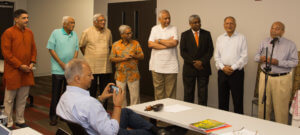
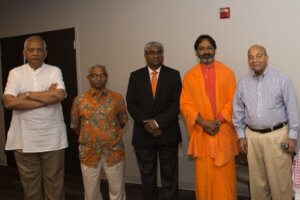
The World Association for Vedic Studies (WAVES) conference hosted an insightful panel discussion on the ongoing challenges in Ayurveda, particularly addressing the dietary conflicts and integration issues with modern day life, as well as co-existence with Western medicine. Moderated by Dr. Mahadevan Seetharaman from the field of integrative healthcare, the panel brought together esteemed experts, including Dr. Bal Ram Singh, Dr. Sangeeta Sharma, and Dr. Vandana Baranwal, to explore the deeper epistemological conflicts, regulatory disparities, and modern challenges facing Ayurveda today.
One of the plenary talks at the WAVES conference focused on the ongoing conflict between Patanjali Ayurveda and the Indian Medical Association (IMA), delving into the epistemological differences between Ayurveda and modern medicine. The talk also discussed the implications of India’s National Education Policy (NEP), which aims to integrate Ayurveda and modern medical education, sparking debates among healthcare professionals.
This blog will explore key insights from the panel and the talk, focusing on dietary conflicts in Ayurveda, the struggle between traditional and modern medical systems, particularly the conflict between Ayurveda and the Indian Medical Association (IMA), and ways forward in reconciling these approaches.
Meet the Panelists
The panel was moderated by Dr. Mahadevan Seetharaman who is a Duke Integrative Healthcare Leader and the Founder of Ayurveda Living. With his background in integrative medicine, Dr. Seetharaman provides a balanced perspective on merging traditional and modern health systems. His work and experience span the United States and India, and currently serves as a faculty at the Hindu University of America (HUA). The panel included:
- Dr. Bal Ram Singh, a renowned professor and researcher with expertise in both modern biochemistry and Ayurvedic biotechnology. His work on neurotoxins and consciousness research, as well as his editorial roles in various journals, positions him as a thought leader in integrative medicine.
- Dr. Sangeeta Sharma, a dedicated Ayurveda Vaidya, brings years of practical experience in Panchakarma, metabolic and lifestyle disorder treatments. Her scholarly background combined with her compassionate practice exemplifies the holistic nature of Ayurveda.
- Dr. Vandana Baranwal, a specialist in women’s health, draws from her deep Vedic roots in Varanasi. She has pioneered women’s wellness solutions through personalized Ayurvedic care, furthering the intersection of traditional wisdom and modern health issues.

Ayurvedic Dietary Conflicts: A Key Focus
The panel delved deeply into dietary conflicts in Ayurveda, particularly how globalization and migration create challenges for Ayurvedic principles related to food. According to Ayurveda, food is considered medicine, and diet must align with an individual’s Prakriti (constitution), age, gender, and environmental factors like the season and local ecosystem.
However, when people relocate—whether for education, work, or other reasons—their new surroundings might not provide access to region-specific Ayurvedic diets. For instance, individuals from India moving to colder, non-tropical climates face challenges in following the same dietary principles prescribed in their native regions. Additionally, the influx of genetically engineered foods and non-native food choices further complicates adherence to Ayurvedic dietary recommendations. The panel discussed how food grown in different regions has different Prabhava (inherent properties), which might not suit an individual’s constitution when consumed in foreign lands.
The WAVES Ayurveda panel discussion explored how Ayurveda can contribute to the concept of Vasudhaiva Kutumbakam (the world is one family), particularly through the lens of dietary practices. The discussion focused on how Ayurvedic texts, like Charak Samhita and Sushrut Samhita, remain relevant today for their holistic approach to health, though the challenge lies in adapting these principles for global contexts. Panelists questioned whether current Ayurveda training includes sufficient practice of historical texts to verify ancient practices and discussed the incorporation of cultural foods from around the world into Ayurveda’s predominantly Indian framework. The relevance of understanding regional variations in fruits, grains, milk, and condiments, all of which differ globally, was also addressed. By broadening the scope of Ayurveda to include food diversity, the panel emphasized the need for evolving Ayurvedic guidelines to support the health of a truly global family.
Ayurveda vs. Indian Medical Association (IMA): A Broader Conflict

Another significant part of the Waves Conference was the plenary talk on the growing conflict between Ayurveda and modern medicine, exemplified by the ongoing disputes between Ayurveda practitioners and the Indian Medical Association (IMA). One of the critical issues is that a substantial number of BAMS graduates (Bachelor of Ayurvedic Medicine and Surgery) are transitioning to modern medical practices rather than sticking to traditional Ayurveda. This trend is partly because the BAMS curriculum has been modeled on the MBBS curriculum, leading to a dilution of Ayurvedic principles in education and professional practice.
The IMA has raised concerns over Ayurvedic treatments being promoted without the same rigorous clinical trials and peer-reviewed research demanded in allopathic medicine. The most publicized of these disputes involved Patanjali Ayurved’s Coronil, which was initially marketed as a COVID-19 cure, leading to a legal confrontation with the IMA. The Drugs & Magical Remedies Act, 1954 and the Consumer Protection Act, 2019, further complicate the issue, as they emphasize stringent regulatory standards that Ayurveda often struggles to meet due to its reliance on traditional and historical knowledge.
Conflicts in India’s National Education Policy (NEP): Ayurveda and Modern Medicine
India’s National Education Policy (NEP) seeks to integrate Ayurveda into mainstream medical education, which has sparked diverse reactions across the healthcare sector. AYUSH practitioners welcome this development, seeing it as a formal recognition of traditional medicine’s importance in promoting holistic health. However, some allopathic doctors and the Indian Medical Association (IMA) have expressed concerns, fearing the policy might create “official quacks” by blending traditional medicine with modern medical practices without ensuring the same level of scientific validation. Additionally, some scientists argue that the NEP’s emphasis on integrating alternative medicine could compromise the advancement of modern medical research, if not properly regulated through clinical trials and evidence-based standards. This highlights the challenge in balancing traditional knowledge with modern healthcare while ensuring both maintain high standards of practice.
The Fundamental Epistemological Differences
A significant theme in the panel discussion was the epistemological differences between Ayurveda and modern medicine. Ayurveda’s holistic approach focuses on maintaining balance in the body, mind, and spirit through proper diet, lifestyle, and herbal treatments. On the other hand, modern medicine adopts a more reductionist, symptom-focused approach, diagnosing and treating specific ailments through pharmaceuticals and surgery. This fundamental divergence in worldview creates barriers to integration, as Ayurveda’s preventive care and lifestyle management contrast with the intervention-based approach of modern medicine.
Path Forward: Reconciling Ayurveda and Modern Medicine
Here are some recommendations for resolving these conflicts:
- Scientific Validation of Ayurvedic Practices: There is a need for more clinical trials and research to validate Ayurvedic treatments within the framework of modern science. Integrative research centers can bridge this gap.
- Customized Diet Plans: The discussion underscored the importance of creating regionally adaptable, Ayurvedic dietary plans that consider the local ecosystem and the evolving nature of food production.
- Educational Reform: The BAMS curriculum should include a deeper focus on Ayurveda’s philosophical foundations, ensuring graduates have a stronger grounding in traditional knowledge.
- Open Dialogue Between Systems: Finally, fostering collaboration between Ayurvedic practitioners and modern medical professionals through platforms like WAVES can promote mutual respect and shared goals.
Conclusion
This panel discussion at the WAVES conference and the plenary talk highlighted the complexities and ongoing challenges in Ayurveda, in its Practice, Education and Research, apart from issues in integrating with modern medicine, particularly in light of dietary conflicts, educational reforms, and the regulatory landscape in India. By addressing these issues through open dialogue and integrative research, both systems can contribute to a more holistic and balanced approach to global healthcare.