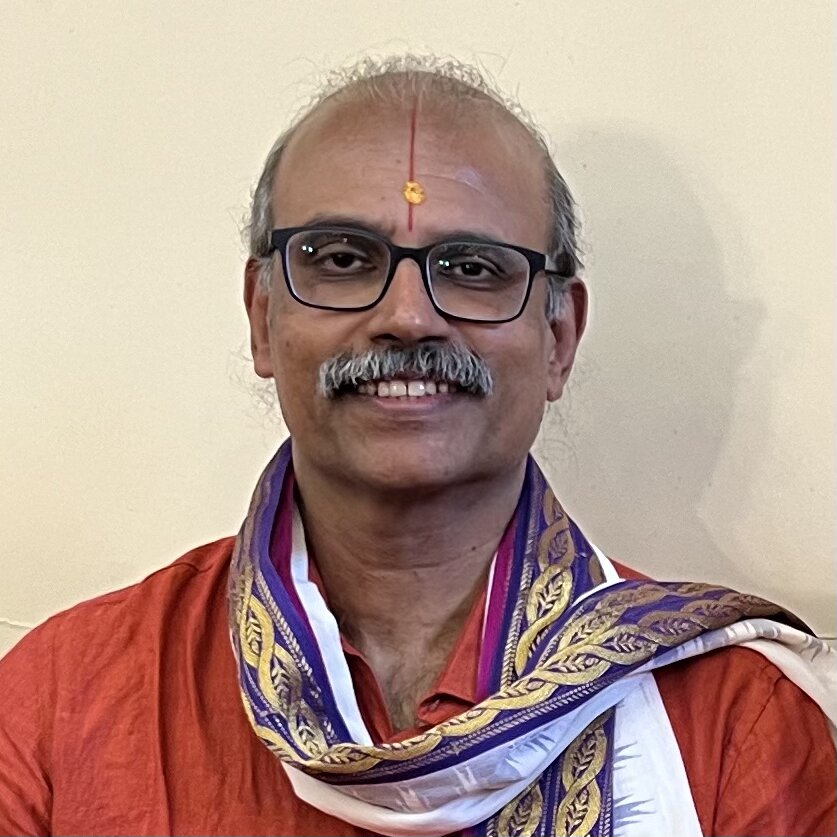







Dr. Sreekumar T. S.

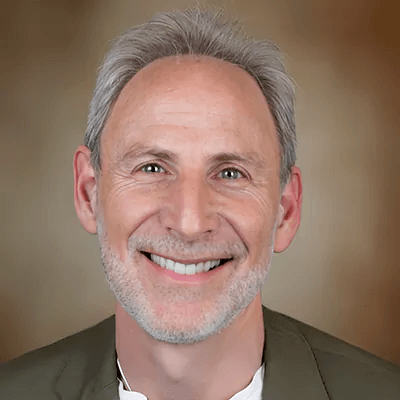
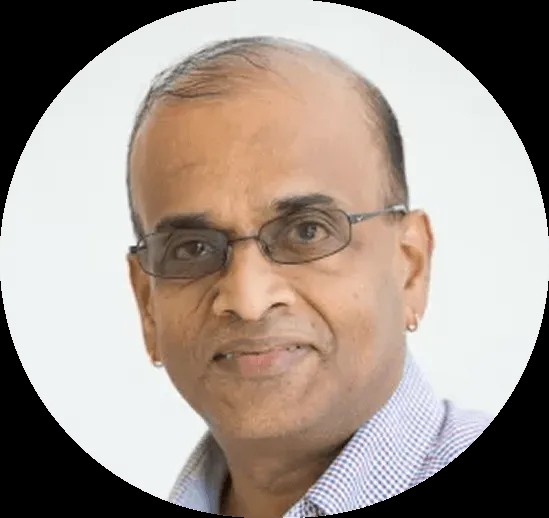
Dr. Sreekumar holds a Ph.D. in Yoga from SVYASA University, with doctoral research focused on the efficacy of yoga-based mindfulness interventions for enhancing psychological wellbeing among corporate professionals. With over two decades of association with SVYASA University in honorary and academic roles, he has been trained under eminent yoga scholars including Dr. H. R. Nagendra, Dr. R. Nagarathna, and Dr. N. V. Raghuram. His academic contributions include multiple research publications in yoga and mindfulness, particularly in the domain of workplace wellbeing, along with collaborative projects involving nationally and internationally reputed institutions. He also serves as a visiting faculty member for Yoga and Management Studies at SVYASA and is the Dean at VaYU USA.

In parallel with academic scholarship, he brings over 20 years of senior leadership experience in global corporate environments, having held roles such as Principal at the Infosys Leadership Institute, Head of Learning and Development at Deloitte US–India Technology Consulting, and Director of Human Resources at UST Global. He has designed and delivered yoga and mindfulness interventions for multinational organizations and premier management institutes worldwide, training participants from over 20 nationalities. His recognitions include the Infosys Excellence Award, the Stevie American Business Award for Best HR Team (2019), and Faculty Excellence at Deloitte. Dr. Sreekumar was also part of the Indian delegation to the British Parliament on International Yoga Day (2019).

View our whole team

Dr. Usha Nagavarapu

Faculty – Community Education Division (Ayurveda and Integrative Health)

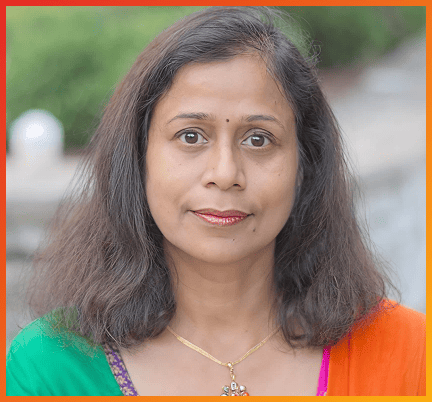
Dr. Usha Nagavarapu is a certified Integrative Ayurvedic practitioner with over 25 years of experience bridging modern science and traditional medicine. She holds a PhD in Pharmacology and Neuroscience from Ohio State University, with post-doctoral training in Dermatology from Stanford University. Throughout her career, she has worked extensively in drug discovery, toxicology, and clinical research, applying her deep scientific knowledge to holistic health and wellness.

As a faculty at HUA, Dr. Usha imparts her expertise in Ayurveda, integrative medicine, and plant-based therapeutics, training the next generation of practitioners in evidence-based approaches to wellness. Her work focuses on longevity, cellular senescence, and aging at the biological level, designing interventions that combine functional medicine with Ayurvedic principles. She specializes in personalized consultations, helping individuals restore balance and vitality through mindful living, nutrition, and botanical therapies.

At Surrasa, a science-led wellness brand grounded in nature and traditional medicine founded by Dr. Usha, she leads the creation of plant-based skincare and wellness solutions that support mind-body health. Under her guidance, Surrasa develops eco-conscious products that integrate Ayurvedic wisdom with modern pharmacology, offering holistic approaches to skin and overall wellness. Her philosophy: true healing begins by honoring the body’s story, and nature holds the blueprint.

View our whole team

Smt. Radhe Pfau

Guided by a deep inner calling toward holistic health and spiritual growth, Radhe embarked on a transformative journey that led her from the corporate world to the study of Ayurveda and Jyotisha. In 2007, she completed a two-year program at The Ayurvedic Institute in New Mexico, including a six-week Gurukula training in Pune, India under Dr. Vasant Lad. This immersion awakened her devotion to the teachings of Sri Aurobindo and the Mother, inspiring her to integrate spiritual wisdom into daily living. In 2017, she joined La Grace, Sri Aurobindo Integral Life Center, as Executive Director, where she leads programs, retreats, and Integral Yoga workshops that reflect her deep spiritual practice. She also founded Medical Relief for India (MRI), a non-profit organization that provides free medical camps for underserved rural communities in India.

Radhe’s professional foundation is equally strong and purposeful. She earned her BS in Finance from the University of Southern California and an MBA in Finance and Strategic Planning from Harvard Business School. Over 25 years in the financial services industry, she honed her skills in management, leadership, and strategic development. This extensive experience now informs her work in holistic education and organizational leadership, blending her professional discipline with her spiritual vision to support transformative growth in individuals and communities.

View our whole team

Dr. Vladimir Yatsenko

Dr. Vladimir Yatsenko holds MA in General and Theoretical Linguistics and Sanskrit Language and Literature from St. Petersburg State University (RF), and PhD in Indian Philosophy from M.S. University of Baroda. His Doctorate thesis was ‘The Vedic Vision and the Concept of Agni in the Rigveda in the light of Sri Aurobindo’.
Vladimir is a scholar and instructor of Sanskrit language and literature and an educator in Vedic and Vedantic studies. He has been teaching in various educational institutions across the world, and is align with the Indian Psychology Institute (Pondicherry, India), International Center in Integral Studies (New Delhi, India), Sri Aurobindo Center for Advanced Research (Pondicherry, India), SAIIER (Auroville, India), Auro University, (Surat, India), Arogya Center (Albuquerque, New Mexico), Ayurvedic Institute (Asheville NC) and a few others. At present he is a Director of the Institute for Applied Research in Integral Studies, at La Grace Sri Aurobindo Integral Life Center, SC, organizing and conducting educational research and programs in Indian Philosophy, Integral Yoga Psychology, Theoretical Linguistics, Philosophy of Language, Studies of the Rigveda, Upanishads, Gita in the light of Sri Aurobindo and The Mother.

View our whole team

Ms. Jenna Love Mleczkowski

Faculty – Community Education (Sanskrit Studies)

Ms. Jenna Love Mleczkowski has been teaching Intro to Sanskrit courses since 2015, guiding students in connecting with the vibrational roots of the language and its transformative practices. She integrates her knowledge of Vedic chanting, yoga, meditation, and mantra into holistic and interactive instruction for both group and individual learners.

Jenna began her formal Sanskrit training at the American Sanskrit Institute through a weekend immersion in 2010 and completed a two-year apprenticeship under its founder, Vyaas Houston. Her passion for Veda was further deepened during a Yoga and Sound retreat at Arsha Vidya Gurukulam in 2017. She graduated from the Veda chanting teacher certification program with INDICA YOGA | Veda Studies in 2023 and continues her studies under Smt. Shantala Sriramaiah and Vedic scholar Shri. Sree Aswath.

She is also a third-generation yoga teacher and earned her 200-hour registered yoga teacher certification with Yoga Alliance in 2013. Jenna holds an undergraduate degree in Marketing from Florida Gulf Coast University (2009), where she also received a Mandarin Chinese language certificate from Yantai University through a study abroad program. Her early travels in central China with Tibetan Buddhist monks inspired her to explore the vibrational and meditative aspects of her sadhana.

Since relocating to Texas in 2020, Jenna has taught at holistic health clinics, retreats, and online platforms, bringing alignment-based instruction, interactive demonstrations, and personalized guidance to students of all levels.

View our whole team

Dr. Ashutosh Pareek

Dr. Ashutosh Pareek is a distinguished Sanskrit scholar, passionate educator, and cultural visionary, presently serving as Professor of Sanskrit in the Higher Education Department, Government of Rajasthan. With twenty years of teaching and research experience, he brings to the Hindu University of America a rare combination of academic excellence and unwavering dedication to Sanskrit teaching and learning.
A gold medalist and Ph.D. in Sanskrit Literature, Dr. Pareek also holds a master’s in education and has guided research at M.D.S. University, Ajmer. His scholarly pursuits include UGC- funded projects, authorship of various textbooks, reference books, contributions to curriculum design, and numerous publications in reputed journals.
He has represented India’s rich Sanskrit heritage on international platforms, presenting his work in the USA, Australia, UAE, and Nepal. A dynamic trainer and speaker, he has conducted impactful workshops for students and educators, sparking renewed interest in Sanskrit across age groups.
Dr. Pareek is the founder of संस्कृतायनम्, a global digital platform promoting Sanskrit, Indian culture, and science. He is affiliated with prestigious organizations such as IASS and WAVES and has received multiple honors from academic and cultural institutions.
For Dr. Pareek, Sanskrit is not merely a subject but a gateway to the timeless wisdom of India. As a visiting faculty member at HUA, he is dedicated to mentoring global learners and enriching the academic pursuit of Indian Knowledge Systems.

View our whole team

Mr. Ajay Viswanath

With over 24 years as a professional facilitator and  35 years as a Bharatanatyam dancer, Ajay offers a unique approach to learning through deep understanding of one’s own somatic wisdom. He has facilitated over 450 programs for more than 15,000 participants and Ajay’s expertise encompasses designing and delivering competency-based leadership programs, high-performance teams, and change management initiatives for individuals and organizations. As a performing artist he has toured India, UK and the USA for performances. An accredited ICF-PCC Coach, Ajay’s clients include CEOs and senior leaders in India and the US, focusing on self-awareness and impactful leadership. Ajay’s academic credentials include a Master of Arts in Global Leadership from Royal Roads University, Canada.

Furthermore, leveraging his deep insights from Natya Shastra, the Ramayana, and bodywork, Ajay offers a distinctive coaching in relationship enhancement. For over five years, he has helped individuals and couples gain profound self-understanding, identify relationship patterns, and foster deeper connections.

View our whole team

Dr. Marc Halpern, D.C., MAS (Ayurvedacharya)

Doctor of Chiropractic (D.C.)

Founder of the California College of Ayurveda 

Dr. Marc Halpern, D.C., MAS. (Ayurvedacharya) has played an important role in the development of Ayurvedic medicine in the West. He is considered to be a preeminent practitioner and teacher of Ayurveda in the United States and continues to develop the programs at the College. He is one of the few Westerners ever recognized in both the United States and in India as an authority on the subject of Ayurveda, and was awarded the All India Award for Best Ayurvedic Physician. 

A pillar in the development of the profession in the United States, he is the co-founder of the National Ayurvedic Medical Association for which he served as Chairman of the National Committee on Ayurvedic Education. He is also a co-founder of the California Association of Ayurvedic Medicine and the National Council on Ayurvedic Education. He started his career as a Doctor of Chiropractic in 1987 when he graduated from Palmer West Chiropractic College. His journey to understand the cause of suffering and to heal himself led him to the field of Ayurvedic Medicine in 1991 when he completed a post-graduate certification program in holistic medicine through New York Chiropractic College. This program introduced him to Ayurveda. At that time, there were only a handful of individuals in the United States knowledgeable in Ayurveda. 

Dr. Marc sought out Dr. David Frawley as a teacher and began a journey deeper into the Vedic sciences. Dr. Frawley introduced him to several teachers from India, most notably Dr. Subhash Ranade. Dr. Halpern sponsored Dr. Ranade to come to the US and to stay at his home. During his visits, Dr. Halpern was given copies of the classical texts. Studying these texts and observing his teacher treating patients helped shape how Dr. Halpern would eventually train other practitioners. Realizing that there needed to be a formal profession for Ayurvedic Medicine in the United States, Dr. Halpern dedicated himself to building this profession, and has been following this mission for more than 20 years. He has authored two important textbooks in the field of Ayurvedic Medicine as well as the popular book, Healing Your Life: Lessons on the Path of Ayurveda and the audio recording, Yoga Nidra and Self Healing. He has published articles in almost every major journal and magazine of Yoga or Ayurveda, and in 2005 was interviewed by Mike Wallace on CBS’s 60 Minutes. Dr. Halpern’s own remarkable story of personal healing was featured in the national magazine Spirituality and Health. He has been quoted in many major newspapers, including The New York Times, The Los Angeles Times and The Miami Herald. In addition to his work with the California College of Ayurveda, Dr. Halpern is a certified yoga instructor and a regular teacher of Ayurveda at International Sivananda Yoga Vedanta Centers worldwide. 

View our whole team

Dr. Dilip Amin

Dr. Dilip Amin is the founder of InterfaithShaadi.org and HinduSpeakers.org and serves as the Director of the Peninsula Multifaith Coalition in the San Francisco Bay Area. A Dharma Ambassador and former Advisory Committee member of the Hindu American Foundation, Dr. Amin is also a jail chaplain and a columnist at Patheos. Over the past 18 years, Dr. Amin has guided over 1,200 young adults in navigating interfaith relationships, sharing his insights through four published books, including Interfaith Marriage—Share & Respect with Equality (Mount Meru), Hindu-Muslim Shaadi—Samasyayen Aur Samadhan (in Hindi, Garuda), Hindu-Muslim Marriage: Difficulties and Reconciliations (Garuda), and Hindu Vivaha Samskara, which he co-authored.

Dr. Amin holds a Ph.D. in Pharmacology and has dedicated over 42 years to research in medicine, securing six patents and publishing 23 scientific papers.  Born in Gujarat, India, and currently residing in the U.S., he has traveled to over 40 countries, gaining a rich understanding of diverse cultures and religions. He previously served as President of Plymouth Balvihar in Blue Bell, Pennsylvania, and founded the Balvihar at Sanatan Mandir in San Bruno, California. He has been happily married for 45 years and is the proud father of two American-born children.

You can read his recent articles on Patheos: Patheos Blog
Website: InterfaithShaadi.org
YouTube: Interfaith Shaadi Videos
LinkedIn: Dilip Amin
Twitter: @IFShaadi

View our whole team

Dr. Vandana Baranwal

Faculty – Community Education Division (Ayurveda & Integrative Health)

Vaidya Dr. Vandana Baranwal holds an M.D. in Ayurvedic Prasūti Tantra and Strī Roga from the Institute of Medical Sciences, Banaras Hindu University, and is a distinguished Ayurvedic physician specializing in women’s health and integrative wellness. With nearly three decades of professional experience, including over a decade of clinical practice and teaching in the United States, she brings deep expertise in traditional Ayurvedic gynecology and holistic healthcare.

Prior to moving to the U.S., Dr. Baranwal served as Professor at SDM College of Ayurveda, Karnataka, one of India’s premier Ayurveda institutions. She currently teaches Ayurveda and integrative health at the Integrative Health Center, Wexner Medical Center, The Ohio State University, and at various Ayurveda institutions internationally.

She is the Founder of Ayurvedatri LLC – Women Wellness Solutions, through which she promotes Ayurvedic approaches to women’s health and well-being. She also serves as Founder and President of the Ayurveda Association of Ohio (501c3), working to expand the reach and credibility of Ayurveda in the Western world.

A prolific educator and scholar, Dr. Baranwal has co-authored two books on women’s health—Strī Roga Vimarśa and Prasūti Tantra Sandarśinī—and serves as Staff Editor for the Ayurveda Journal of Health (University of Massachusetts). Her contributions to Ayurvedic education have been recognized with the Charaka Award for Excellence in Teaching.

Drawing on her roots in Varanasi and a deep understanding of Ayurveda, Yoga, and Vedic traditions, Dr. Baranwal is dedicated to advancing authentic Ayurvedic knowledge and cultivating holistic health across all stages of life.

You can find Vaidya Dr. Vandana Baranwal –
Website- https://www.ayurvedatri.com/
LinkedIn: https://www.linkedin.com/in/prof-vandana-baranwal
Instagram: https://www.instagram.com/ayurvedatri/

View our whole team

Smt. Sahana Singh

Sahana Singh is an author and commentator based in Ithaca, NY in the United States. Having a professional background in environmental engineering, she brings a unique perspective to her writing, with her grasp of diverse subjects such as Indian history, water management, and education. Her first book “The Educational Heritage of Ancient India – How an Ecosystem of Learning was Laid to Waste” has been appreciated for awakening Indians to the role played by India in spreading knowledge around the world. The book has garnered acclaim for its compelling narrative, awakening readers to the profound impact of India’s intellectual legacy.

Building on the success of her first book, Sahana’s second work, “Revisiting the Educational Heritage of India,” published by Vitasta, offers a deeper exploration into India’s distinctive ecosystem of learning. In this work, she meticulously unravels the layers of India’s knowledge-centric society, connecting it with the major academic disciplines pursued today.

Sahana Singh’s work enables a deeper understanding of India’s cultural and educational roots. It helps to cultivate an appreciation for the historical forces that continue to shape our contemporary world.

An alumnus of Delhi Technological University, Sahana made a career shift to writing after moving to Singapore. She worked as Editor of Asian Water Magazine for many years. Sahana’s articles have been published in Reader’s Digest, Washington Post, Discovery Channel Asia, Asian Water Magazine, Swarajya, IndiaFacts and other publications. Sahana is on the board of many nonprofit organizations related to history, heritage, education, and restoration of Samskara. She is passionate about travelling and connecting the dots across different societies, civilizations and disciplines.

View our whole team

Dr. Suryanarayana Nanda

Faculty – Community Education Division (Sanskrit Studies)

Dr. Suryanarayana Nanda is Sanskrit Studies faculty and a distinguished scholar with a lifelong commitment to the study of Vedic texts and Classical Sanskrit literature. He holds a Ph.D. in Sanskrit from Utkal University, Bhubaneswar, as well as an M.A. and M.Phil. from Delhi University. Additionally, he earned his Sahityācārya degree from S. Jagannatha Sanskrit Visvavidyalaya, Puri.

Dr. Nanda has had an illustrious academic career, including serving as an Assistant Professor of Sanskrit at St. Stephen’s College, Delhi University. He also spent a decade as an Acharya (traditional teacher) of Vedic texts and philosophy at a renowned Gurukul in New Delhi. In addition to his teaching roles, Dr. Nanda has had a significant impact on media, having worked for over ten years as a Sanskrit broadcaster with All India Radio and Doordarshan in Delhi.

A passionate advocate for the promotion of Sanskrit as a spoken language, Dr. Nanda volunteered as a full-time Pracharaka for over 13 years, contributing to the preservation and growth of Sanskrit in modern society. An accomplished author and editor, Dr. Nanda has published more than 30 articles in Sanskrit, Hindi, and English, and served as editor of Arsha Jyotih, a respected Sanskrit monthly magazine.

Since 2012, Dr. Nanda has been serving as an Acharya at the Vedic Culture Center, Arya Samaj Greater Houston, where he continues to inspire and educate others in the teachings of Vedic culture and Sanskrit.

View our whole team

Courses Taught By Dr. Suryanarayana Nanda

Explore our comprehensive curriculum designed to deepen your understanding of ancient texts, languages, and philosophies.

Featured Image

Introduction to Manusmriti – Chapter 1: Origins of Dharma and Creation

TAT3000 – This course offers a focused exploration of Chapter 1 of the Manusmriti (also known as the Manava Dharmashastra), one of the foundational texts of ancient Indian legal and moral philosophy. Chapter 1 serves as the prologue to the Manusmriti and lays the groundwork for understanding the cosmic origins of Dharma (righteous duty), the structure of society, and the divine basis of moral law. Students will examine the mythological and philosophical narrative of creation, the emergence of the four varnas (social classes), and the role of Manu as the first lawgiver and progenitor of humanity. The course will also introduce key Sanskrit terminology and themes such as Dharma, ritual order, varna, and cosmic law. Students will engage with the original Sanskrit verses alongside translations and critical perspectives to develop a nuanced understanding of the text. The module encourages both traditional interpretation and modern critical inquiry, making it suitable for students interested in textual analysis, ethical philosophy, religious tradition, and socio-legal history.
Featured Image

Wisdom at the Lake: Unraveling Yaksha-Prashna

SAN2001 – The Yakṣa-yudhiṣṭhira-saṁvāda from the Mahābhārata’s Vana Parva is a profound philosophical dialogue where Yudhiṣṭhira engages with a Yakṣa, answering questions on dharma, wisdom, and morality. This course offers an in-depth study of selected verses from this celebrated episode, focusing on recitation, grammatical structure, and interpretative analysis (anvaya, vyākhyā). Through this examination, students will deepen their understanding of Sanskrit literary traditions while honing their linguistic and analytical skills. By engaging with these timeless teachings, participants will cultivate an appreciation for the intellectual and ethical depth of Sanskrit literature, enriching both their cultural insight and scholarly acumen.
Featured Image

Exploring Chandas

SAN2002 – This course offers an in-depth study of Sanskrit prosody (छन्दः), focusing on both Vedic and laukika meters. Students will examine the characteristic features (laksana) and practical applications (prayoga) of these poetic structures. The curriculum covers the principles of laghu (light) and guru (heavy) syllables and introduces key concepts such as Gaṇa parichaya—the patterns of light and heavy syllables in sequences. Additionally, the course explores three forms of verse: syllabic (akṣara-vṛtta), syllabo- quantitative (varṇa-vṛtta), and quantitative (mātrā-vṛtta). This systematic approach enhances linguistic skills, aids memorization, and deepens understanding of the literary and aesthetic dimensions of Sanskrit poetry.
Featured Image

Conversational Sanskrit IV

SAN0004 – The fourth and final course in the Micro Certificate in Conversational Sanskrit for Hindu Studies (MCCS) concludes this well-structured program in spoken Sanskrit, equipping students with proficiency in the language. At this stage, students will be able to understand and summarize long Saṃskṛtam speeches. They will also have the skills to use passive and impersonal voices in sentence formation and incorporate them into conversations. This course marks the culmination of the program, and students will have developed the necessary proficiency to engage in live debates with their classmates and create skits based on real-life scenarios.
Featured Image

Conversational Sanskrit III

SAN0003 – The third course in the  Micro Certificate in Conversational Sanskrit for Hindu Studies (MCCS), aspires to facilitate the students to become fluent in conversational Sanskrit. During this course, students will listen to news clips, comprehend them and be able to summarize the news in Saṃskṛtam (Sanskrit). They also learn to efficiently employ active voice in sentence formation and apply it in daily conversations. By the end of the course, students will have developed sufficient proficiency in spoken Sanskrit to be able to debate on a prepared topic with their cohorts during class. They will wrap up the quarter by synthesizing and performing a skit based on a preselected story.
Featured Image

Conversational Sanskrit I

SAN0001 – The first course in the Micro Certificate in Conversational Sanskrit for Hindu Studies (MCCS) aims to help students develop a good level of comfort and fluency in speaking Sanskrit (Saṃskṛtam), while minimizing grammatical errors. Throughout this course, students will develop the necessary skills to comprehend sentence structure and effectively use prepositional phrases in order to construct more elaborate conversations. They will also learn to paraphrase customized sets of dialogues provided to them and while expanding their vocabulary. By the end of the course, students will have acquired enough proficiency in Sanskrit to collaboratively create and perform a skit with their peers. The medium of instruction for this course will primarily be in Sanskrit, with translations provided in English only when necessary. This will ensure that students become well-versed in spoken Sanskrit.
Featured Image

Conversational Sanskrit II

SAN0002 – The second course in the  Micro Certificate in Conversational Sanskrit for Hindu Studies (MCCS), Conversational Sanskrit II, aims to enable students to become conversant in Sanskrit (Saṃskṛtam). During this course, students will practice reciting verses in Sanskrit. They will learn to correctly apply tenses and moods in sentences to communicate their thoughts. By the end of the course, students will have acquired sufficient proficiency in Sanskrit to produce a grammatically correct transcript for a skit that they will perform. The medium of instruction for this course will be Sanskrit, providing an environment where the students feel completely at ease conversing in spoken Sanskrit and fully immerse in it. 
Mitra! Ask me anything!