





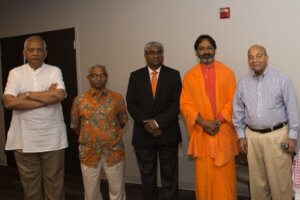

Courses Taught By Shri Haridas Radhakrishnan

Explore our comprehensive curriculum designed to deepen your understanding of ancient texts, languages, and philosophies.

Featured Image

Laghu Siddhanta Kaumudi – Beginner 1

SAN3011 – Laghu-Siddhānta-Kaumudī –Beginner 1 introduces students to the formal and methodical study of Sanskrit grammar through Varadarāja’s Laghu-Siddhānta-Kaumudī, using the edition and translation by Medha Michika. This course lays the foundation for navigating the grammatical framework of Pāṇini by developing a clear understanding of essential terminology, conceptual structures, and the metarules that shape his grammatical system. Special emphasis is placed on the principles governing vowel combinations (ac-sandhi) and their application in real textual contexts. By the end of the course, students will be able to recognize, analyze, and accurately interpret vowel sandhi in Sanskrit prose and verse, including passages from texts such as the Bhagavad Gītā, Rāmāyaṇa, Mahābhārata, and various stotras, thereby preparing them for deeper study of Pāṇinian grammar in subsequent courses.
Featured Image

Laghu Siddhanta Kaumudi – Beginner 2

SAN3012Laghu-Siddhānta-Kaumudī – Beginner 2 introduces students to the principles and applications of sandhi (of which vowel sandhi was covered in the previous course) as presented in the Laghu Siddhānta Kaumudī, using the edition and translation by Medha Michika. Specifically, consonantal sandhi, visarga transformations, and anusvāra-related changes, with systematic reference to Pāṇinian sūtras are covered here. By the end of the course, students will be able to recognize, analyze, and accurately interpret non-vowel sandhi in Sanskrit prose and verse, including passages from Sanskrit texts and various stotras, thereby preparing them for deeper study of Pāṇinian grammar in subsequent courses.  
Featured Image

Laghu Siddhanta Kaumudi – Beginner 3

SAN3013 - Laghu-Siddhānta-Kaumudī – Beginner 03  provides a thorough study of the key aspects of Sanskrit grammar as presented in the Laghu Siddhānta Kaumudī. It covers the Kāraka Prakaraṇam and Vibhakti Prakaraṇam in full, followed by a focused study of the Ajanta Puṃlinga Prakaraṇam for akārānta (अकारान्त) masculine nouns. Students will explore the semantic roles of verbs, the correct application of case endings to nouns, pronouns, and adjectives, and the formation and modification of masculine noun stems. Emphasis is placed on understanding grammatical patterns and their practical application in reading, parsing, and composing Sanskrit sentences.
Featured Image

Laghu Siddhanta Kaumudi – Beginner 4

SAN3014 - Laghu-Siddhānta-Kaumudī – Beginner 04 focuses on the continuation of the Ajanta Puṃlinga Prakaraṇam, dealing with vowel-ending stems in Sanskrit nouns across all three genders—masculine, feminine, and neuter. This includes all vowel ending stems like ikārānta, ukārānta, ṛkārānta stems excluding akārānta masculine stems which were covered in the previous quarter. Students study the formation, modification, and declension patterns of these vowel ending stems, including vowel adjustments, suffix application, and phonological modifications. Emphasis is placed on understanding the systematic patterns of noun formation, the interaction of stems with case endings, and the accurate use of these nouns in Sanskrit sentences and in Sanskrit texts.
Featured Image

Samskritam Through Bhagavad Gita – Proficiency IV

SAN1044 – (CSBG – Required Course) The Final quarter of the Proficiency phase of Samskritam Through Bhagavad Gita program focuses on the Bhagavad Gita chapter18. At the end of this course students will be able to apply the Saṃskṛtam concepts and grammar learnt in this course to perform Anvaya translations and articulate the meanings of the ślokas. As part of this program ending course, students will also prepare a reference chart of all the Saṃskṛtam grammar concepts learnt in this course. Collaborating in groups, students will also present a summary of their learnings in this course reflecting on how the Bhagavad Gītā has impacted society.
Featured Image

Samskritam Through Bhagavad Gita – Proficiency II

SAN1042 – (CSBG – Required Course) The Second quarter of the Proficiency phase of Samskritam Through Bhagavad Gita program focuses on the Bhagavad Gītā chapters 11 through 13. At the end of this course students will be able to apply the Saṃskṛtam concepts and grammar learnt in this course to perform Anvaya translations and articulate the meanings of the ślokas. This quarter will also offer the students an opportunity to explain their views on the important concept of Viśwarūpadarśana in the Bhagavad Gītā.
Featured Image

Samskritam Through Bhagavad Gita – Proficiency I

SAN1041 – (CSBG – Required Course) The First quarter of the fourth and final year (Proficiency phase) of the Samskritam Through Bhagavad Gita program focuses on the Bhagavad Gītā chapters 6 through 10. At the end of this course students will be able to apply the Saṃskṛtam concepts and grammar learnt so far to perform Anvaya translations and articulate the meanings of the ślokas. This quarter will also entail an analysis of dhyāna and meditation in daily life.
Featured Image

Samskritam Through Bhagavad Gita – Intermediate IV

SAN1024 – (CSBG – Required Course) The Fourth and final quarter of the Intermediate Phase of the Samskritam Through Bhagavad Gita course continues to enhance students' grasp and understanding of passive voice. At the end of this course, students will be able to employ different tenses and verb forms in passive voice. Students will also analyze and compose the meanings of ślokas from Chapters 3 and 4 of the Bhagavad Gītā and explain the philosophical concepts covered therein. At the end of this course, students will be ready to progress to the Advanced Phase of the program.
Featured Image

Samskritam Through Bhagavad Gita – Intermediate III

SAN1023 - (CSBG – Required Course) The Third Quarter of the Intermediate Phase of the Bhagavad Gītā through Saṃskṛtam course expands the students' grammatical understanding and usage of passive voice. At the end of this course, students will be able to employ more complex Saṃskṛtam in their verbal and written communication through use of passive voice and conditional mood. Students will continue to examine the ślokas from Chapter 3 and 4 of the Bhagavad Gītā, compose the meanings in Saṃskṛtam and explain the underlying concepts from these ślokas
Featured Image

Samskritam Through Bhagavad Gita – Intermediate II

SAN1022 – (CSBG – Required Course) The Second Quarter of the Intermediate Phase of the Samskritam Through Bhagavad Gita course will continue to enhance understanding of Saṃskṛtam grammar and usage. At the end of this course, students will be able to employ potential mood, complex pronoun forms, ordinal and cardinal forms of numbers and enhanced vocabulary. Students will continue to analyze ślokas from Chapter 3 of the Bhagavad Gītā and will be able to derive the meanings from the text as well as gain an understanding of the philosophical messages from the ślokas.
Featured Image

Samskritam Through Bhagavad Gita – Intermediate I

SAN1021 – (CSBG – Required Course) The First Quarter of the Intermediate Phase of the Samskritam Through Bhagavad Gita will focus on more advanced language concepts, cases for complex word endings, conditional mood, usage and rules for adjectives. At the end of this course students will be able to read and write more complex sentences and texts in Saṃskṛtam. Students will also be introduced to the concept of translating poetic verses to prose in the form of anvaya and tatparyam thus enhancing their understanding and usage of Saṃskṛtam in written communications. This quarter covers Bhagavad Gītā ślokas from Chapters 2 and 3 and the meanings will be articulated in Saṃskṛtam (and English for clarifications).
Featured Image

Samskritam Through Bhagavad Gita – Beginner IV

SAN1014 – (CSBG – Required Course) The Fourth and final Quarter of the Beginner Phase of the Samskritam Through Bhagavad Gita enables students expand their grammar and use of the Saṃskṛtam language. By the end of this course students would have developed understanding of all cases. Students will also be able to employ future tense in sentences in addition to present, past and imperative forms. The grammar further expands with the introduction of prefixes, indeclinables, and more intricate verb forms such as ktvantam and lyabantam. The course will continue to cover ślokas and key philosophical messages from Chapter 2 of the Bhagavad Gītā. While the medium of introduction will continue to be English, significant use of Saṃskṛtam will be promoted. This marks the completion of the Beginner Phase of the Bhagavad Gītā and students will progress to the Intermediate phase courses.
Featured Image

Samskritam Through Bhagavad Gita – Beginner III

SAN1013 – (CSBG – Required Course) The Third Quarter of the Beginner Phase of the Samskritam Through Bhagavad Gita course expands on the previous quarter introducing students to additional cases and verb forms. This includes objective case forms and the various prepositions and postpositions governing this case. Additionally this course will lay the foundation for Chapter 2 of the Bhagavad Gītā and explore ślokas from this chapter. The medium of introduction continues to be in English but there will be increasing use of Saṃskṛtam during the course.
Featured Image

Samskritam Through Bhagavad Gita – Beginner II

SAN1012 – (CSBG – Required Course) The Second Quarter of the Beginner Phase of the Samskritam Through Bhagavad Gita course continues to develop students on the basic constructs of the language. Additional grammatical concepts will be introduced in the form of locative cases for nouns and pronouns as well as imperative mood and past tense forms for verbs. The course will continue to examine the contents of chapter 1 of the Bhagavad Gītā and explanation of the meanings from the text in English.
Featured Image

Samskritam Through Bhagavad Gita – Beginner I

SAN1011 – (CSBG – Required Course) The first course of the Beginner-phase of the Samskritam through Bhagavad Gita(CSBG) offers a structured introduction to Saṃskṛtam, highlighting its enduring significance to both India and the world. Students will be introduced to the śikṣāśāstra, one of the six vedāṅgas, which focuses on phonetics as applied to Saṃskṛtam. Core topics include the classification of vowels and consonants and their phonetic implications, vowel accentuation, and the mechanisms of vowel and consonant combinations. The course further explores the visarga(aspirate) and the anusvāra(nasal resonance), examining how they transform within sentences. An overview of noun and verb formations is provided, along with the basic structure of Saṃskṛtam sentences. Together, these foundations prepare students for engaging with the Bhagavad Gītā in its original language.
Mitra! Ask me anything!